Textile Practices, Costume Design, Disability Aesthetics, Crip Practice, Transdisciplinary Pedagogy
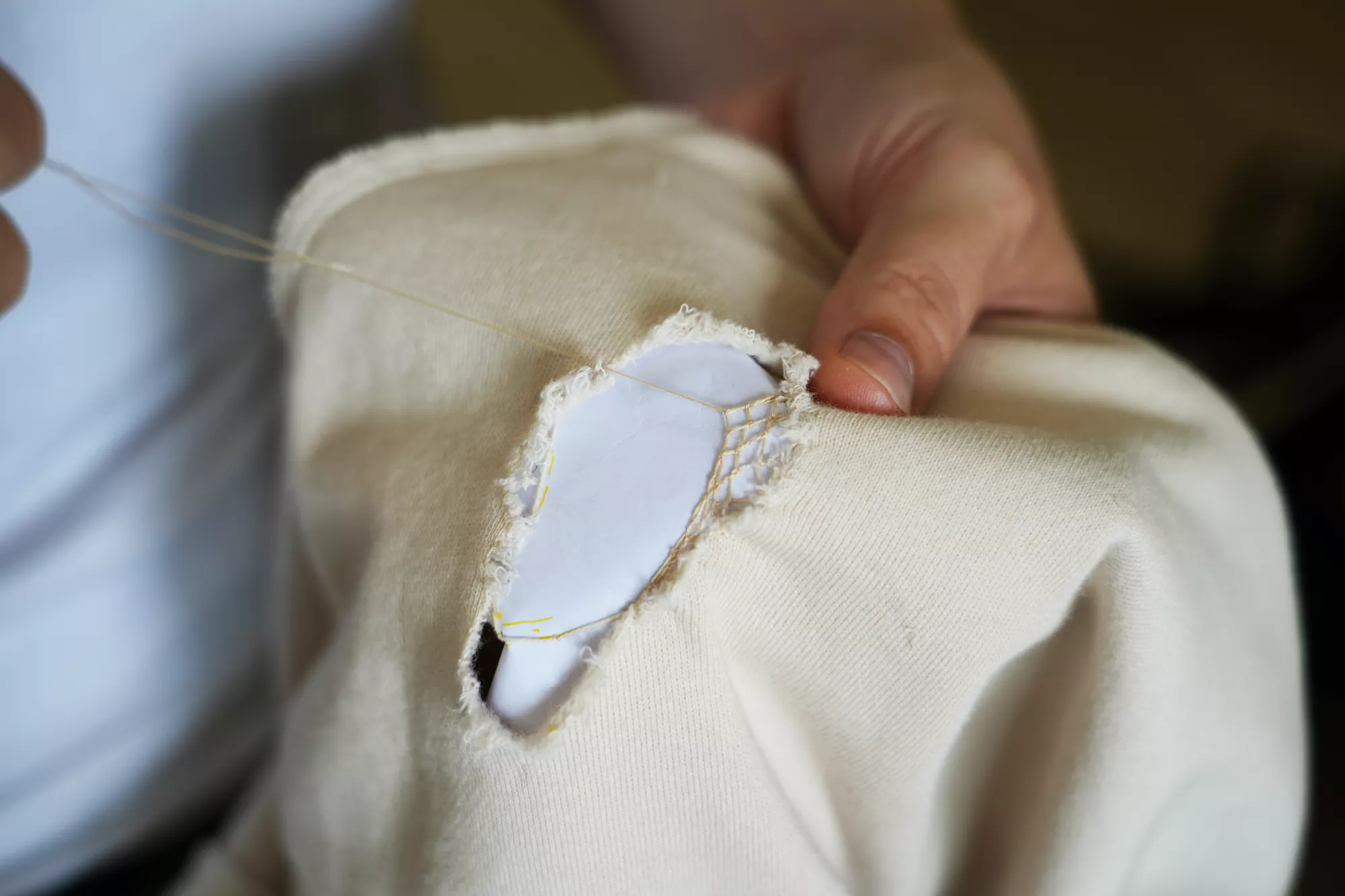
Close-up of a broken cream-coloured sweater with a hole in it, being repaired using the xiaoshan lace technique. A hand stitches fine beige thread across the frayed opening, creating a mend.
©Xuechen Wang
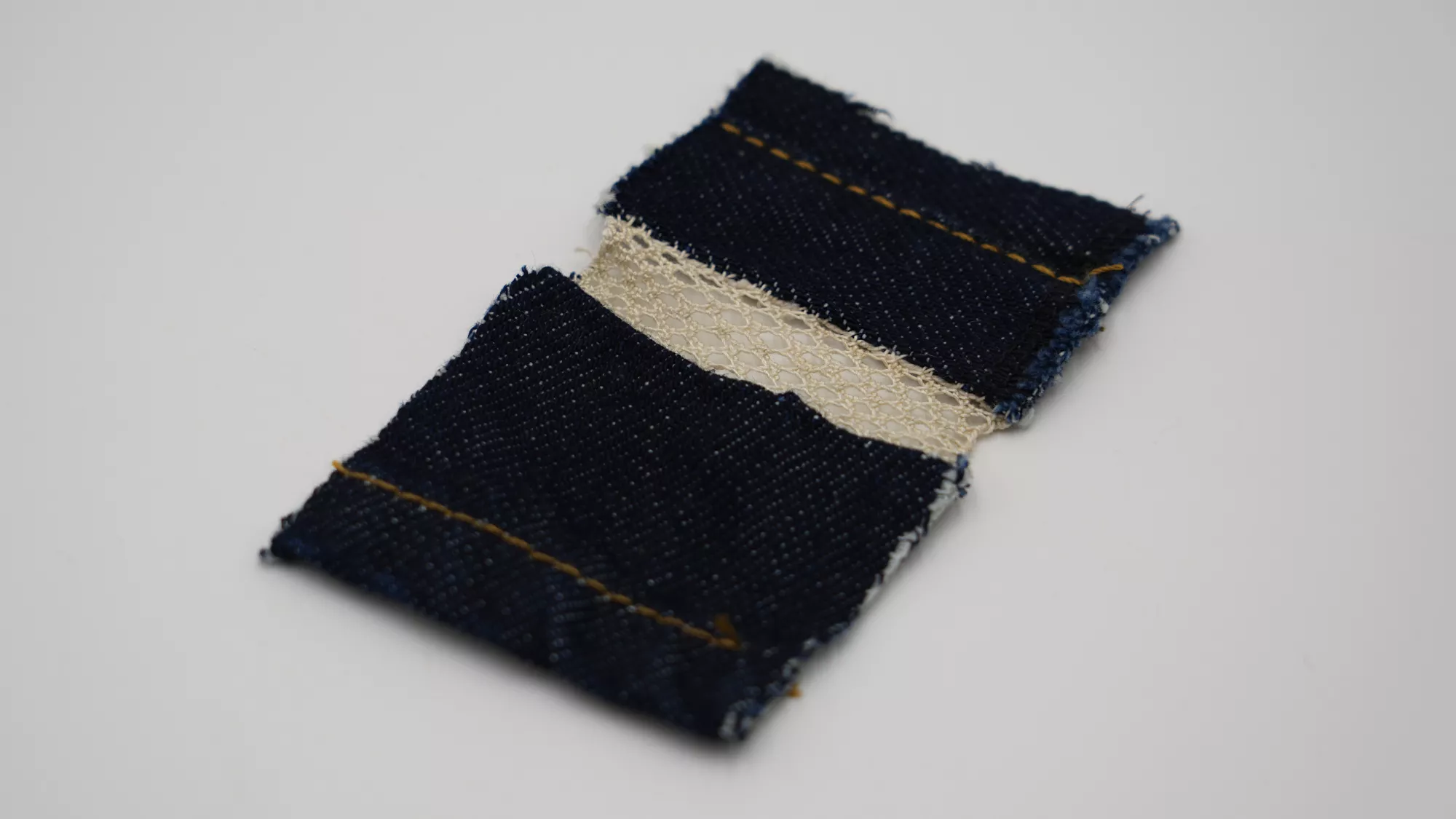
Close-up of a Xiaoshan lace textile sample on a plain white surface. Two squares of dark blue jeans scraps are connected by a narrow strip of cream-coloured lace.
©Xuechen Wang
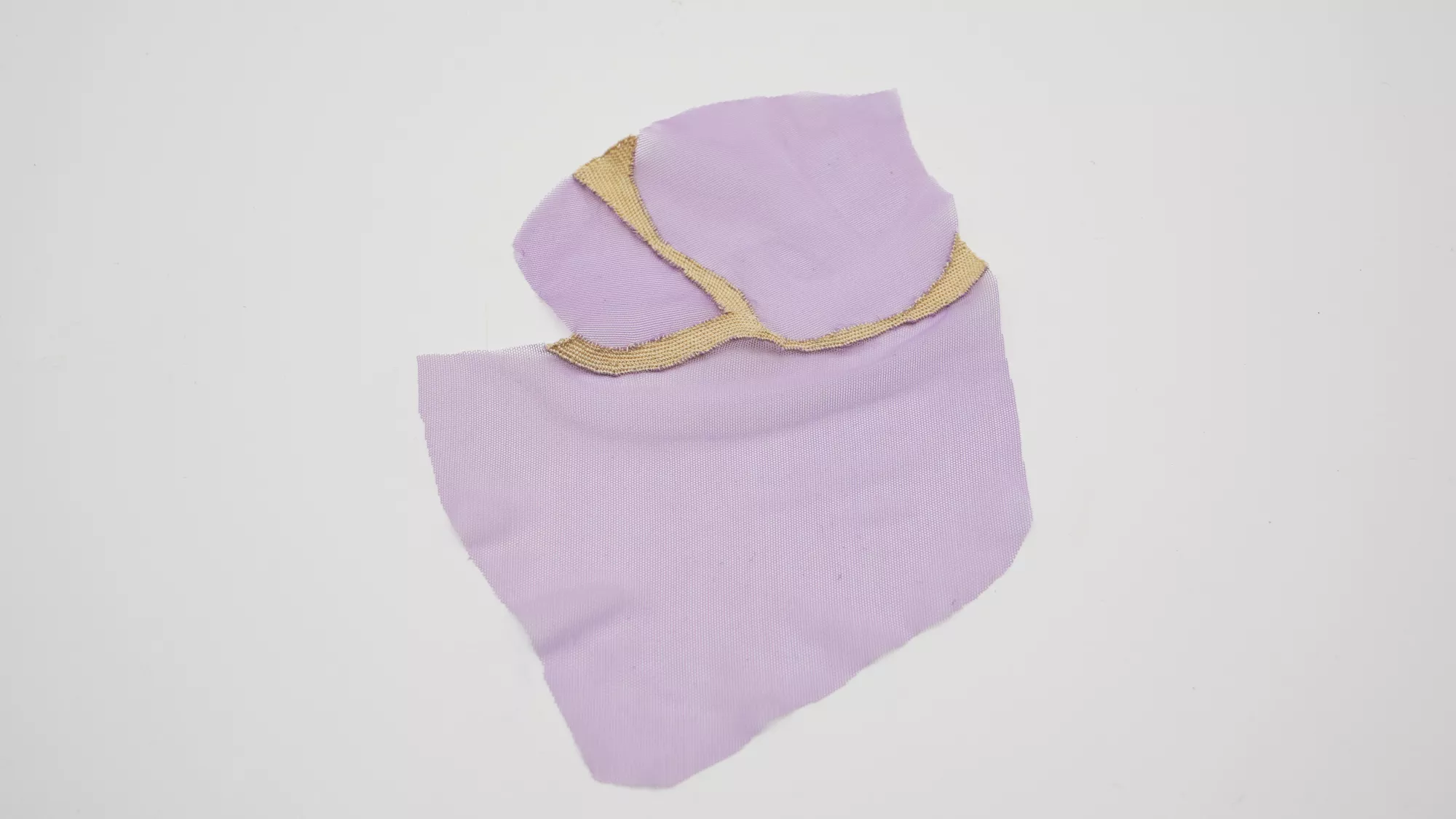
A Xiaoshan lace textile sample on a plain white surface. Two pale lavender tulle pieces are joined by a narrow strip of beige lace, forming a curved seam across the sample.
©Xuechen Wang
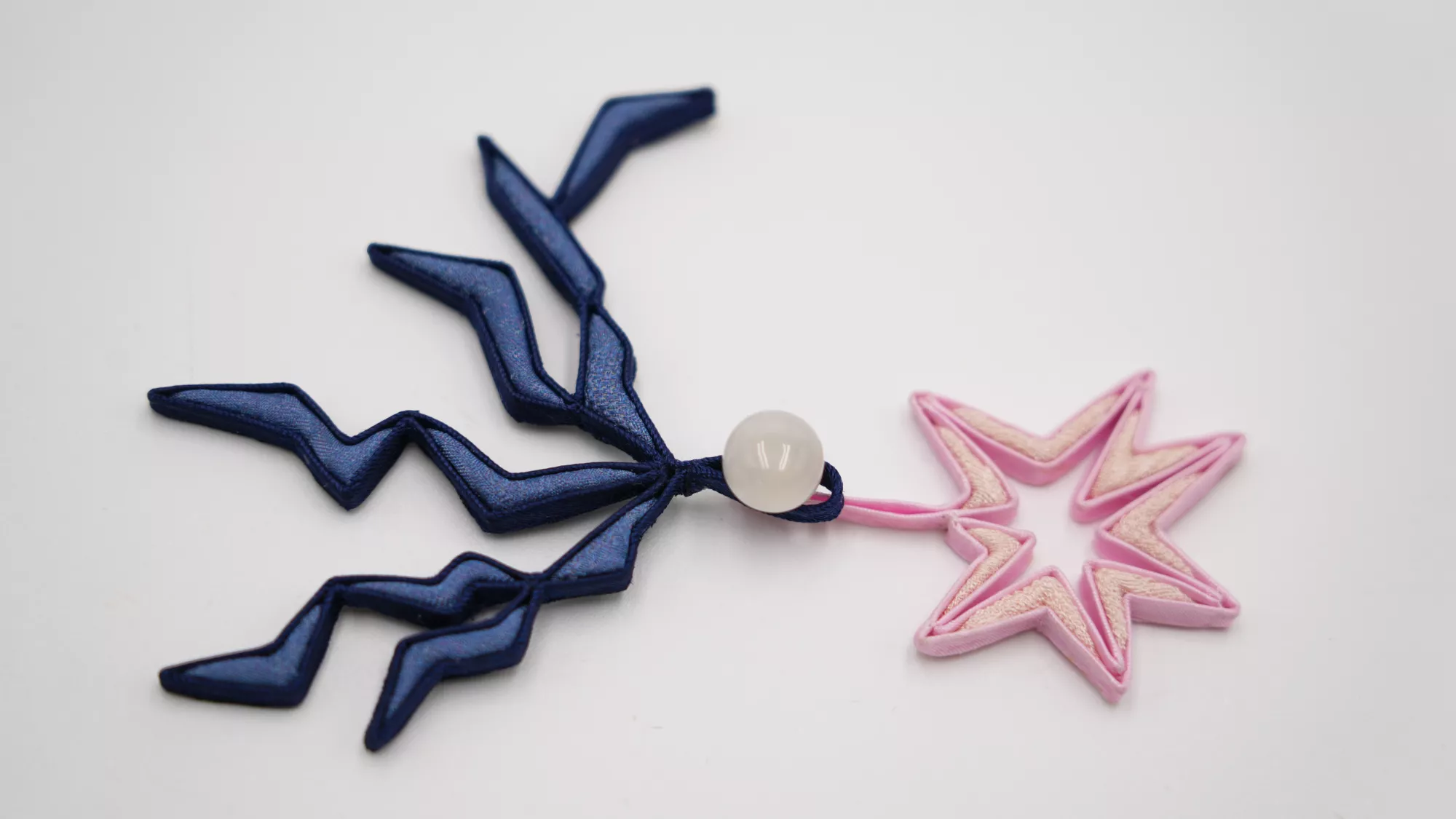
A finished pankou design, inspired by a Design of a workshop participant, on a plain white surface. A dark blue knot-like form with angular, branching loops is connected to a pink star-shaped loop by a round white bead.
©Xuechen Wang
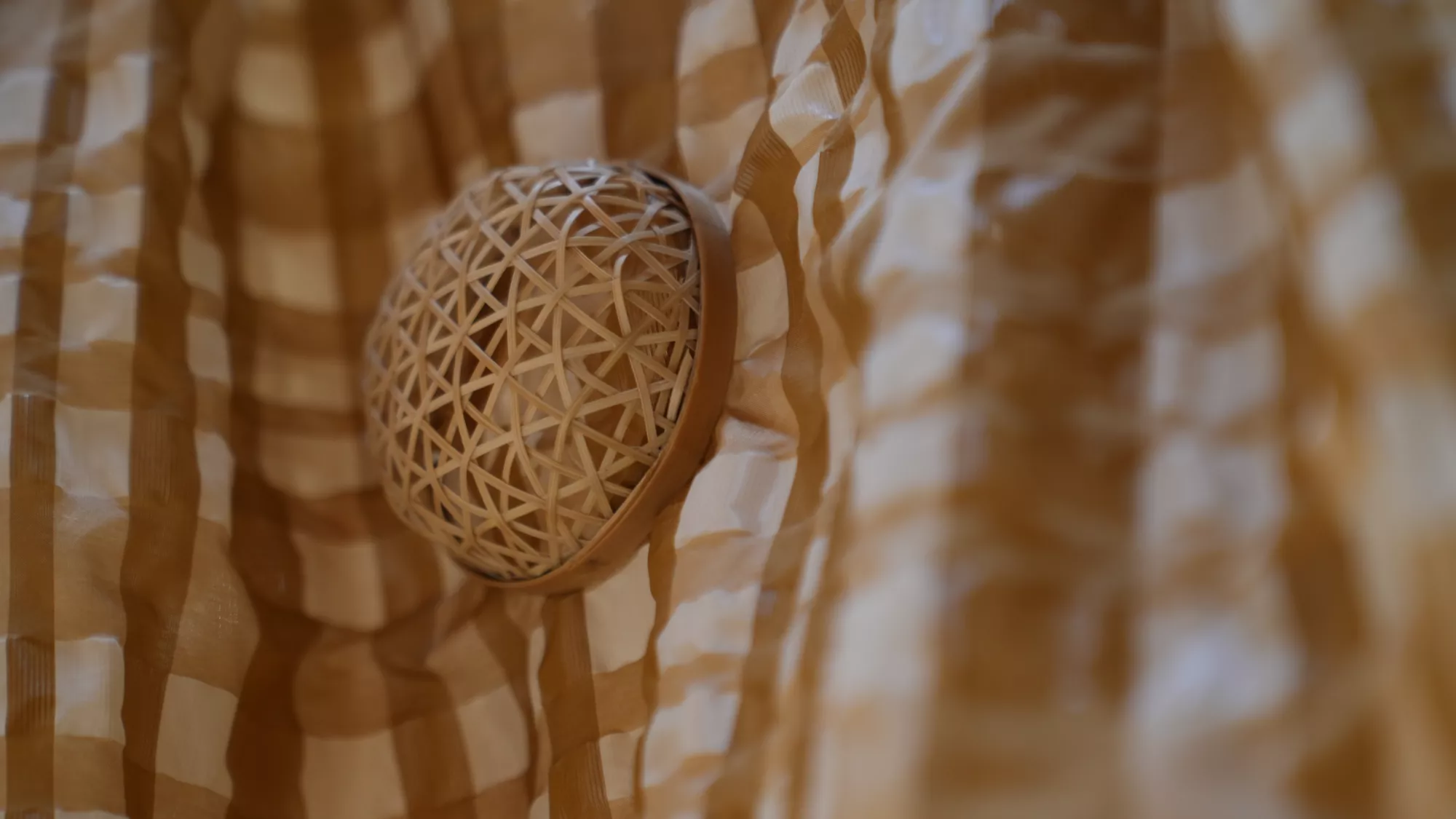
Close-up of a bamboo brooch attached to a brown and cream checkered skirt. The brooch has a rounded, dome-like shape made from interlaced strips of bamboo.
©Xuechen Wang
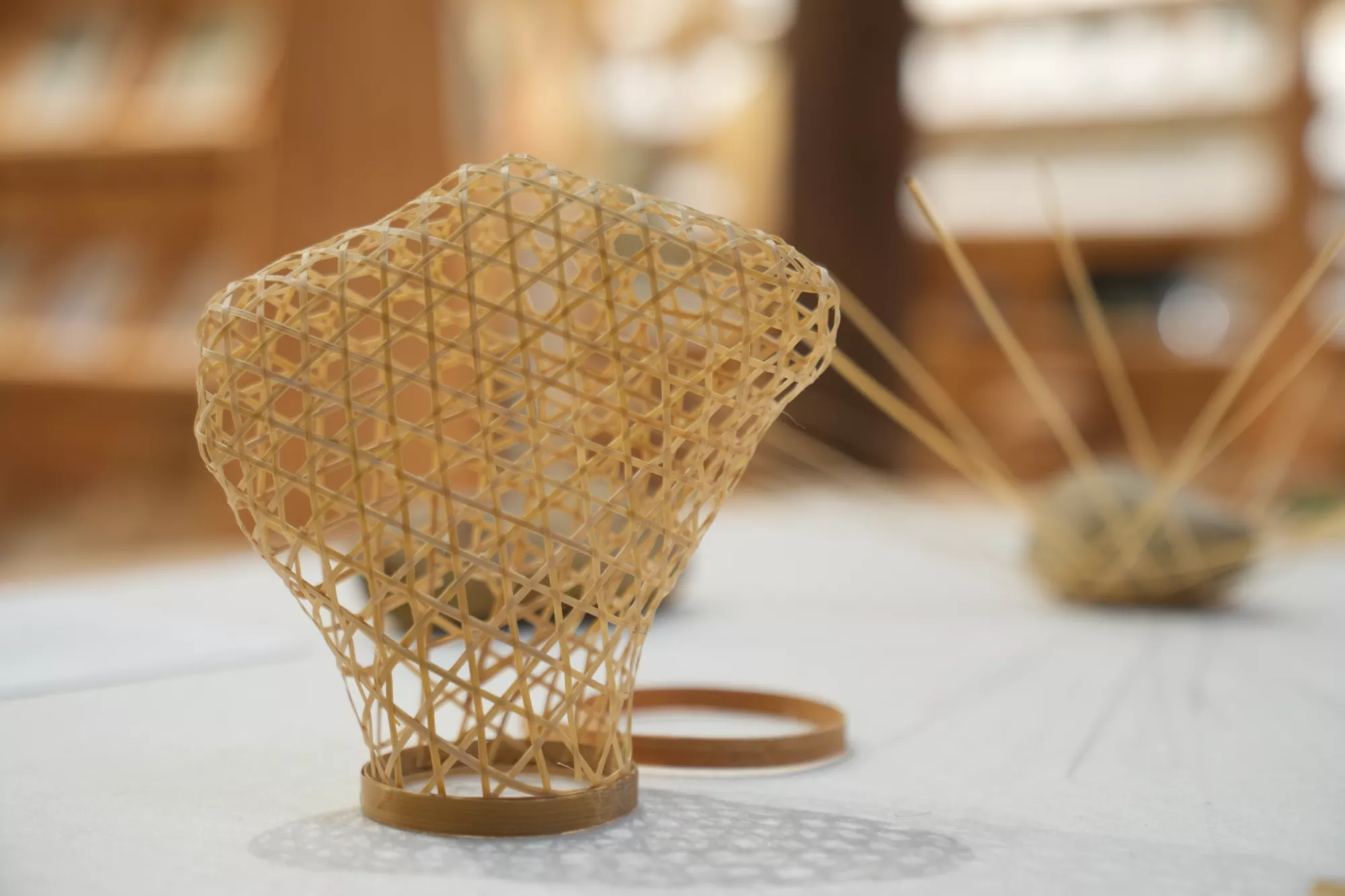
A bamboo brooch displayed on a white surface. The brooch is woven from thin bamboo strips into an open, irregular, sculptural shape. It was made by weaving the bamboo around a stone so that the finished piece takes on the stone’s contour.
©Xuechen Wang
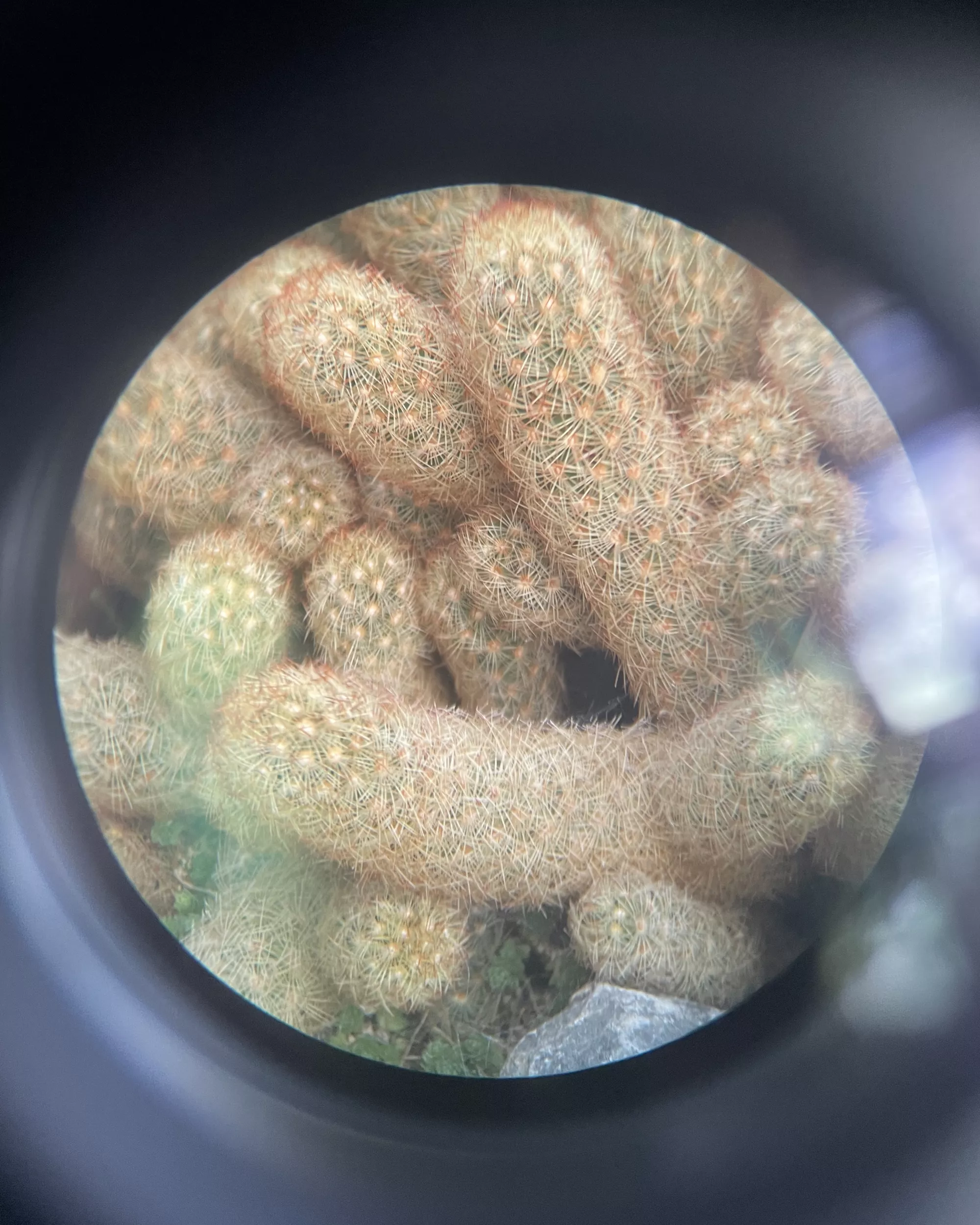
View through a binocular which show small cacti. They're colours varies from brown to green.
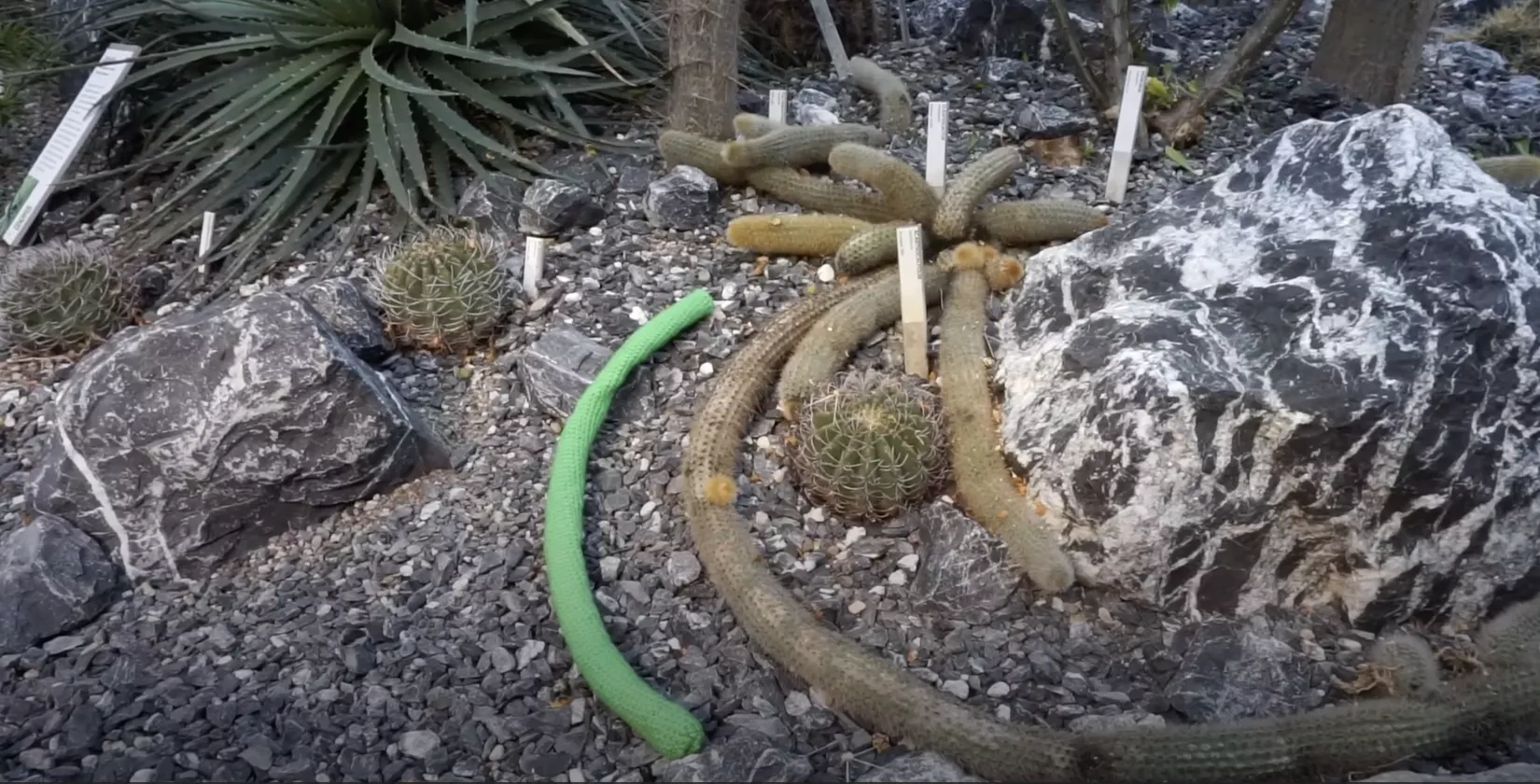
Film still from "to succulent" by Neyen Pailamilla. A green, crocheted, cactus-like textile form lies on the gravel inside a succulent collection, surrounded by rocks, plant labels, agaves, and long trailing cacti.
© Neyen Pailamilla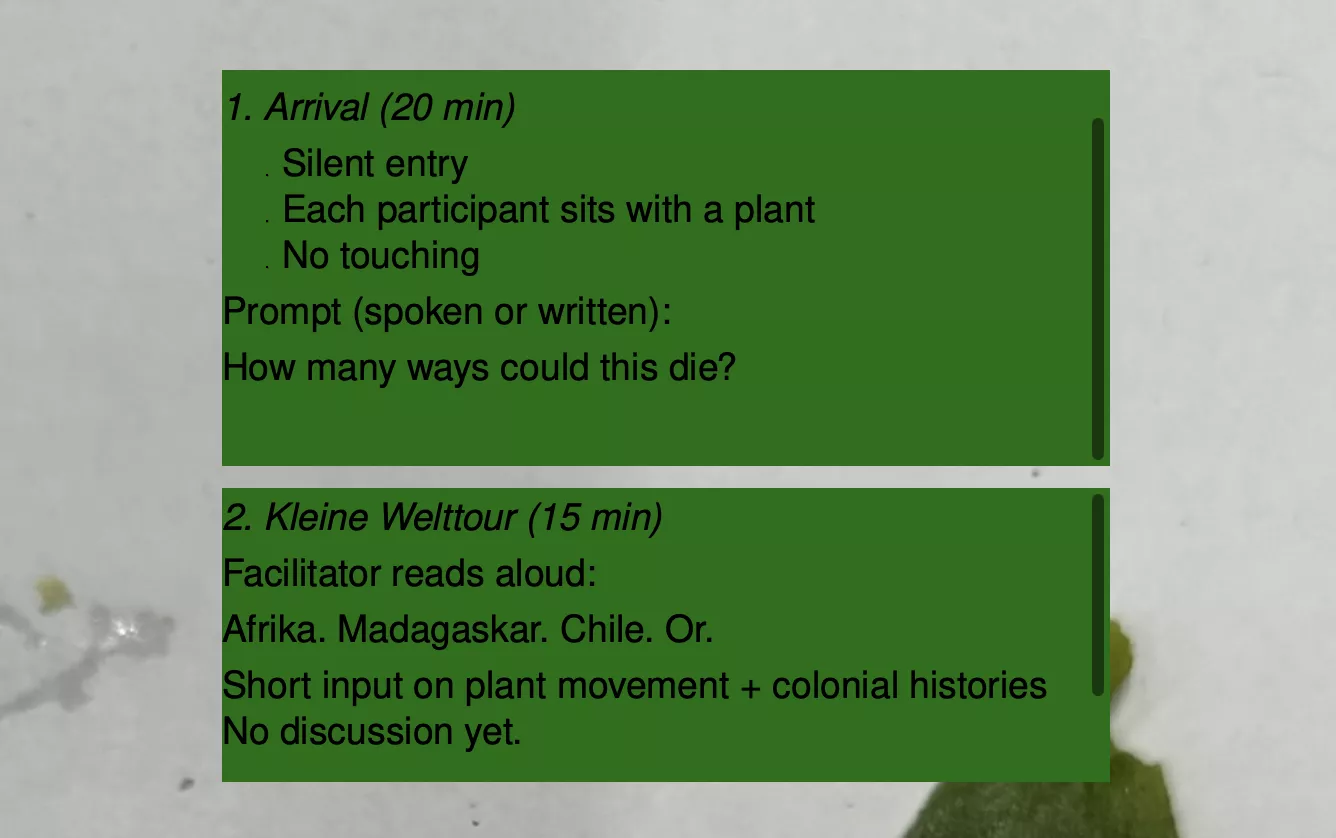
Screenshot of Deborah Macauley’s contribution of a workshop format. Two green text boxes sit on top of a pale, blurred background image. The first box is titled “1. Arrival (20 min)” and lists: silent entry, each participant sits with a plant, no touching. It includes the prompt: “How many ways could this die?” The second box is titled “2. Kleine Welttour (15 min)” describes a facilitator reading aloud: Africa, Madagascar, Chile, or.
© Deborah Macauley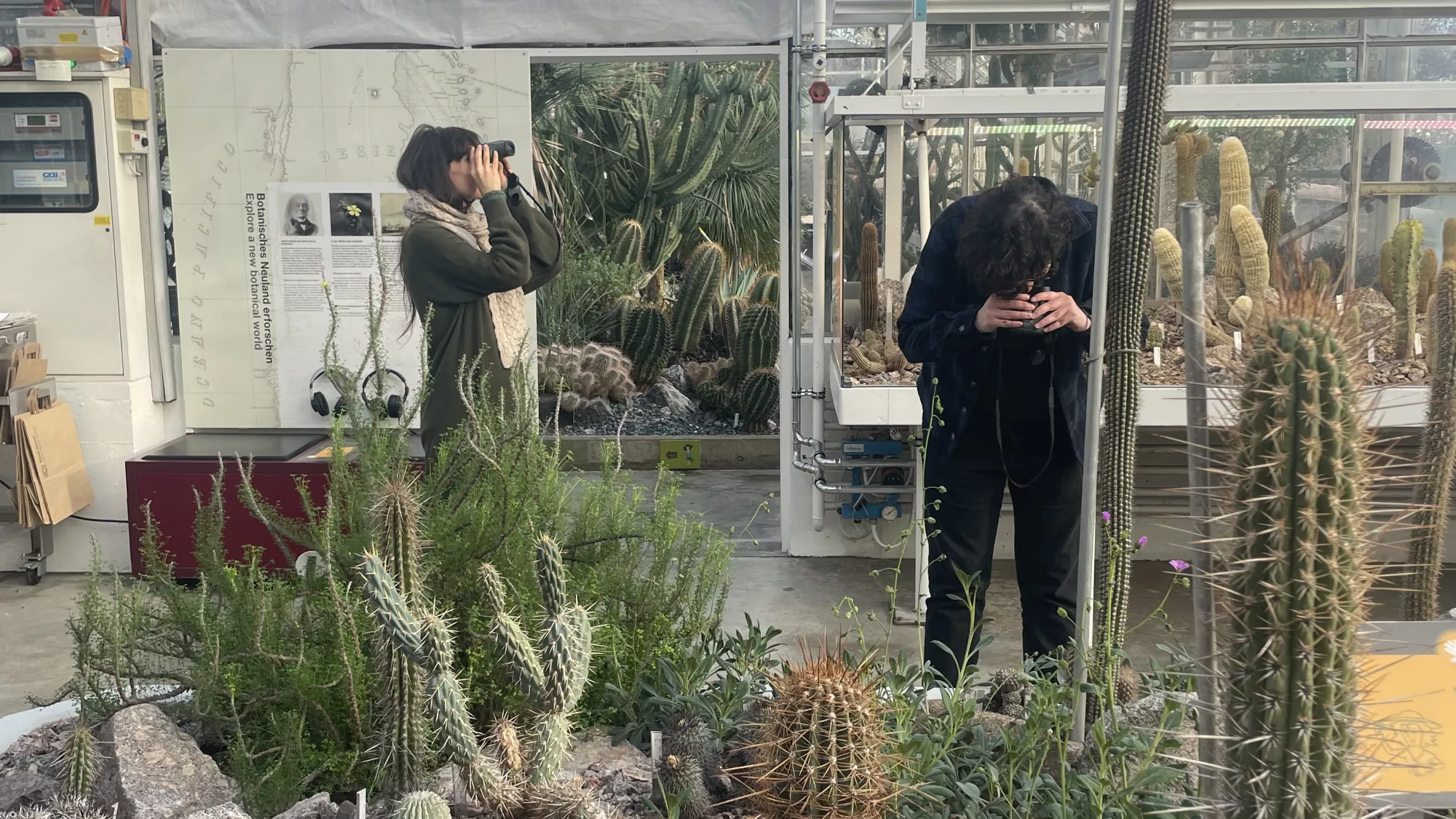
Two students stand inside the Sukkulenten-Sammlung Zurich, surrounded by cacti, succulents, rocks, and plant labels. Both are observing the plants through binoculars: one holds the binoculars up to her eyes, while the other bends forward to look closely at the plants.
© Nicole Frei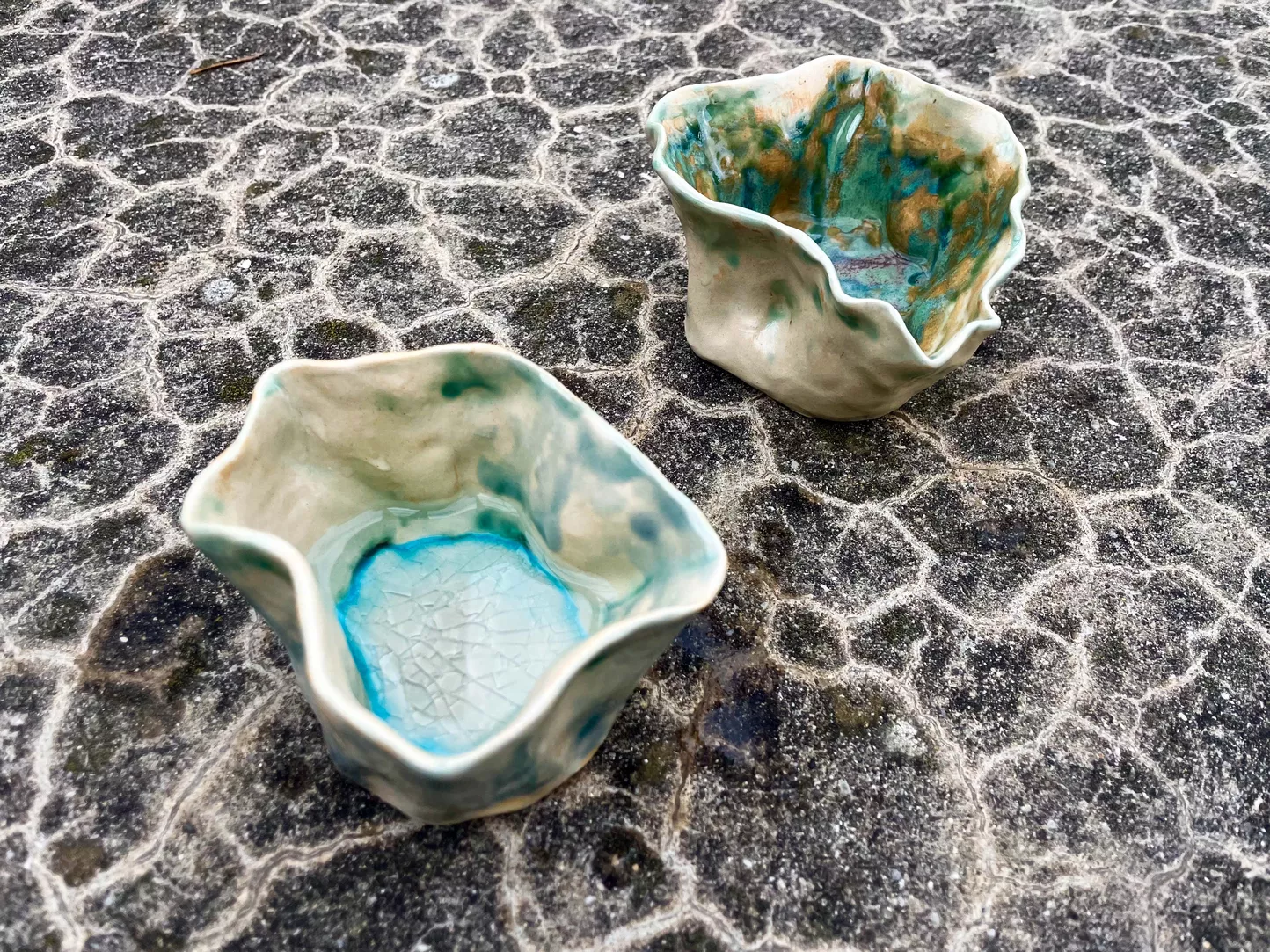
"From texture to form exploration" by Anna-Tia Buss shows two small handmade ceramic vessels that are placed on a dark, patterned stone surface. The vessels have irregular, softly folded edges and glossy glazes in pale cream, turquoise, green, and earthy brown tones.
© Anna-Tia Buss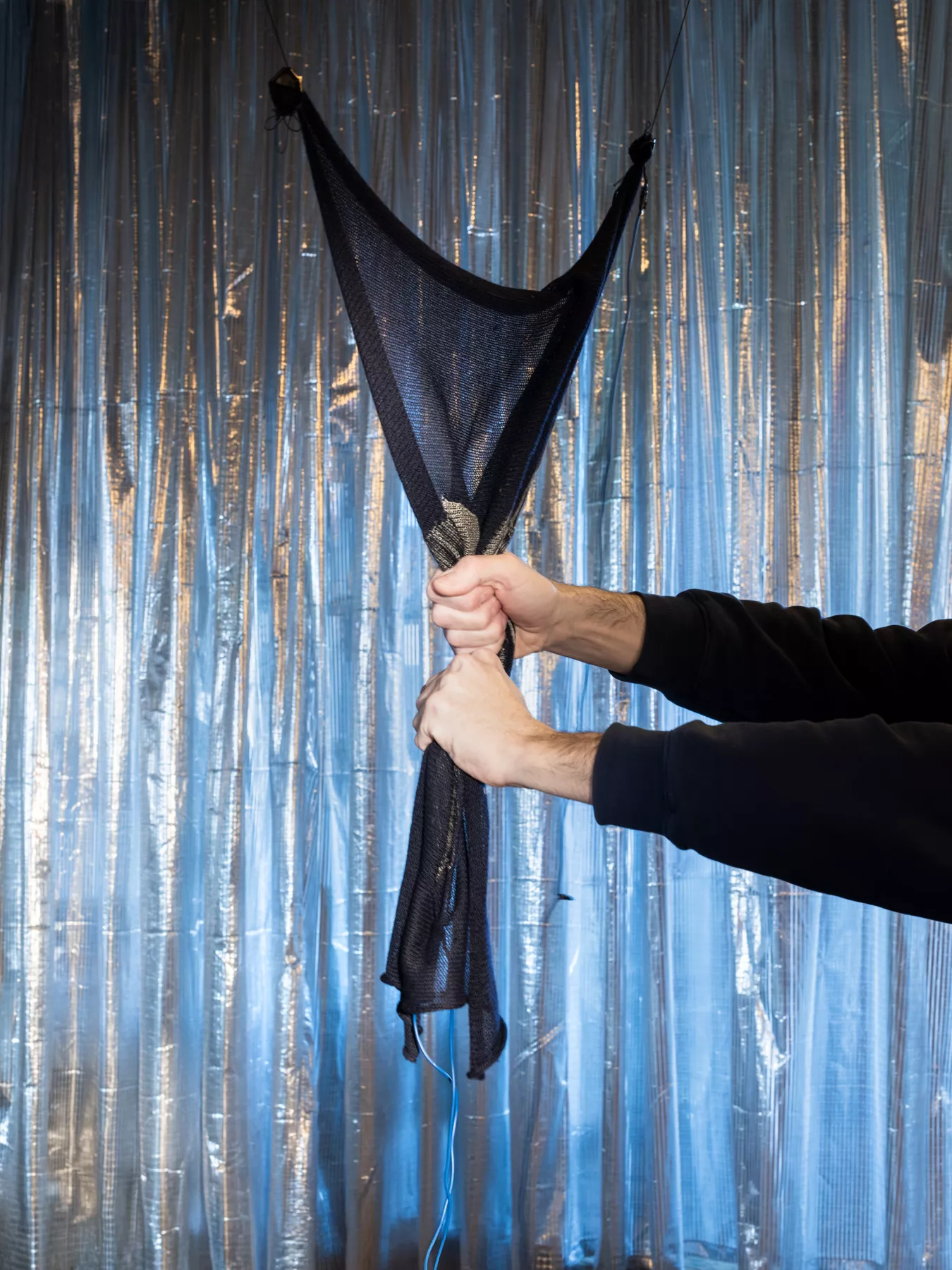
"Nothing in nature exists alone" by MArcel Rickli, Laura Wagner and Ramona Sprenger: The image shows a person grips a dark, knitted piece with both hands. The textile is suspended from above and gathered tightly in the person’s hands, which creates the sound of "Nothing in nature exists alone". Behind it, a translucent blue and silver curtain reflects the light.
© Marcel Rickli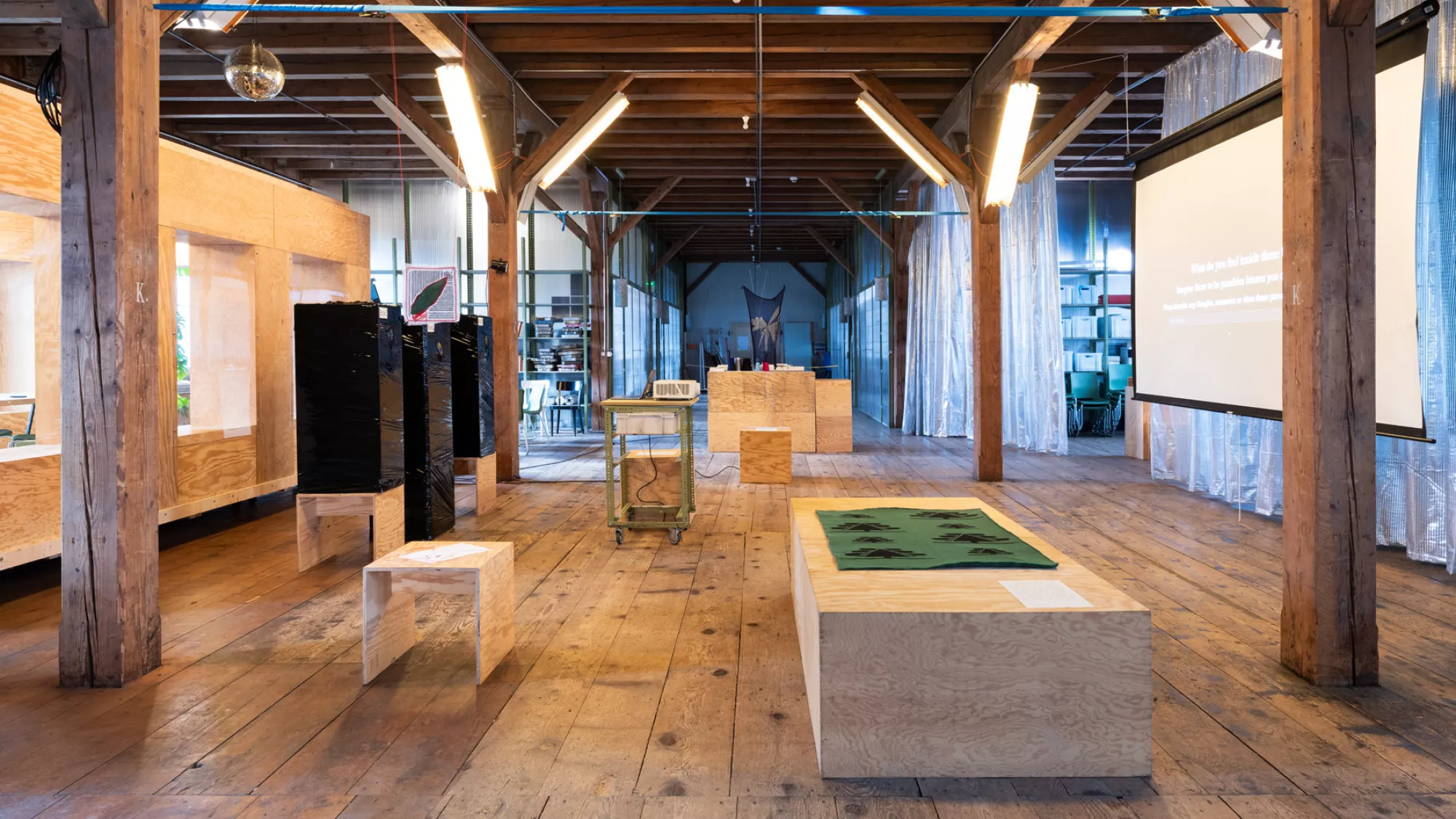
Wiew of the exhibition space Maison Shift, which is in a wooden attic-like hall with exposed beams and timber floors. Several installations are arranged throughout the room, including wooden display plinths, black wrapped structures, translucent hanging curtains, a projector on a trolley, and a large projection screen with text. A green knitted carpet is displayed on a low wooden platform in the foreground, while further textile and material works are visible in the background.
© Marcel Rickli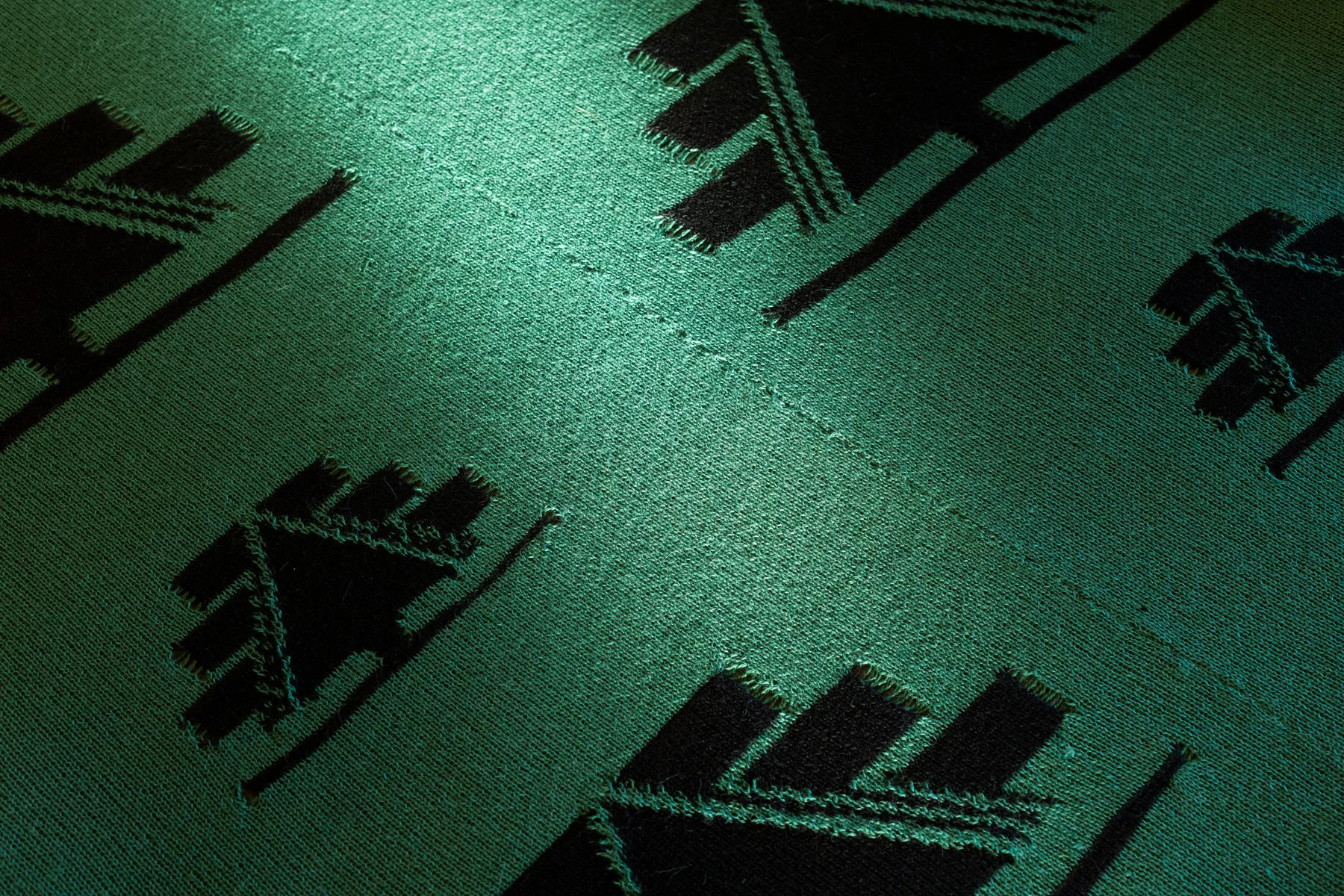
Close-up of the work by Neyen Pailamilla. A dark green knitted textile carpet with repeated black graphic motifs. An abstract symbol of a tree, arranged across the surface. A strong light reflects across the centre of the fabric, emphasizing the texture of the knit and the contrast between the green ground and black pattern.
© Marcel Rickli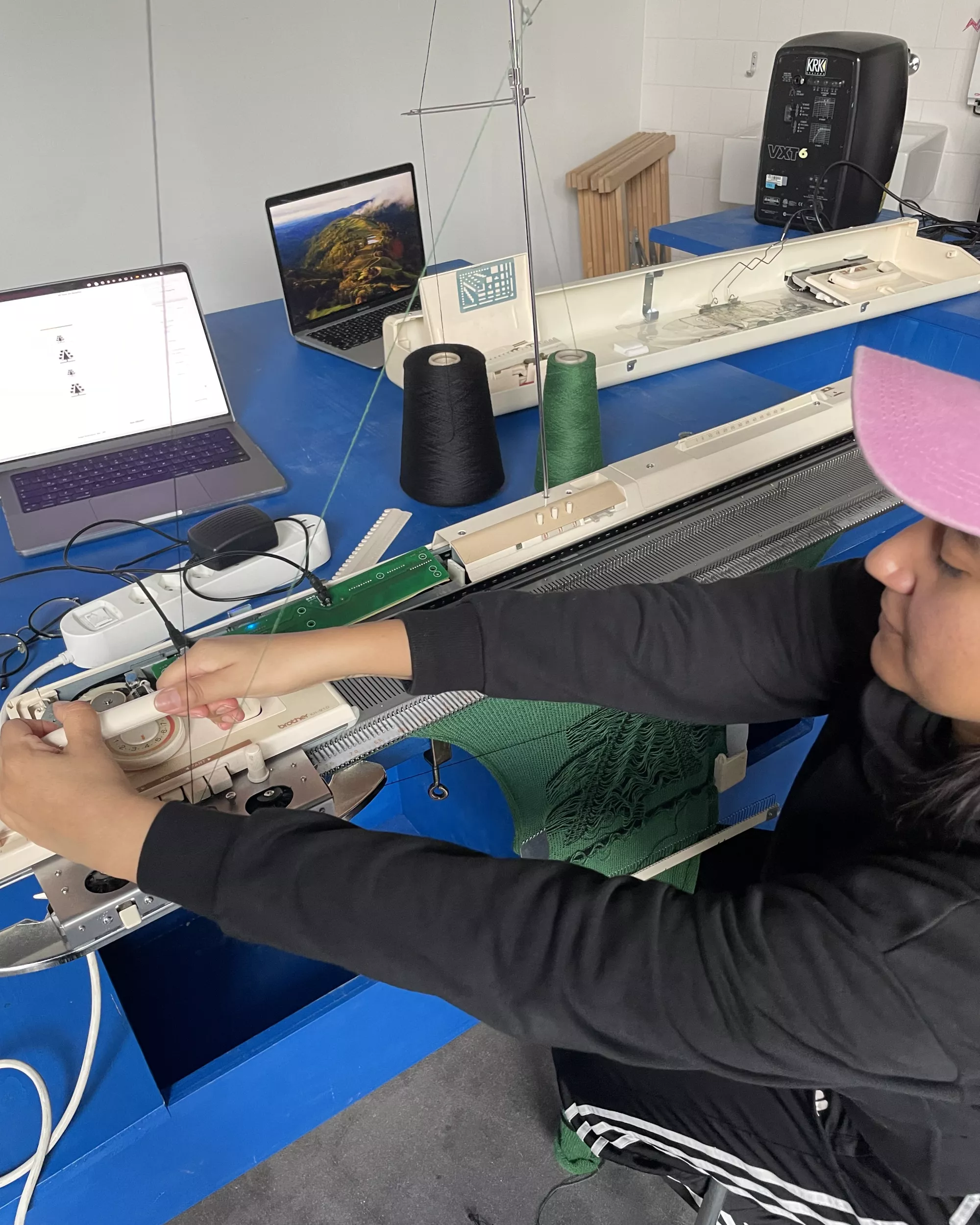
A person wearing a pink cap using the hacked brother knitting machine, creating a green fabric.
©Nicole Frei
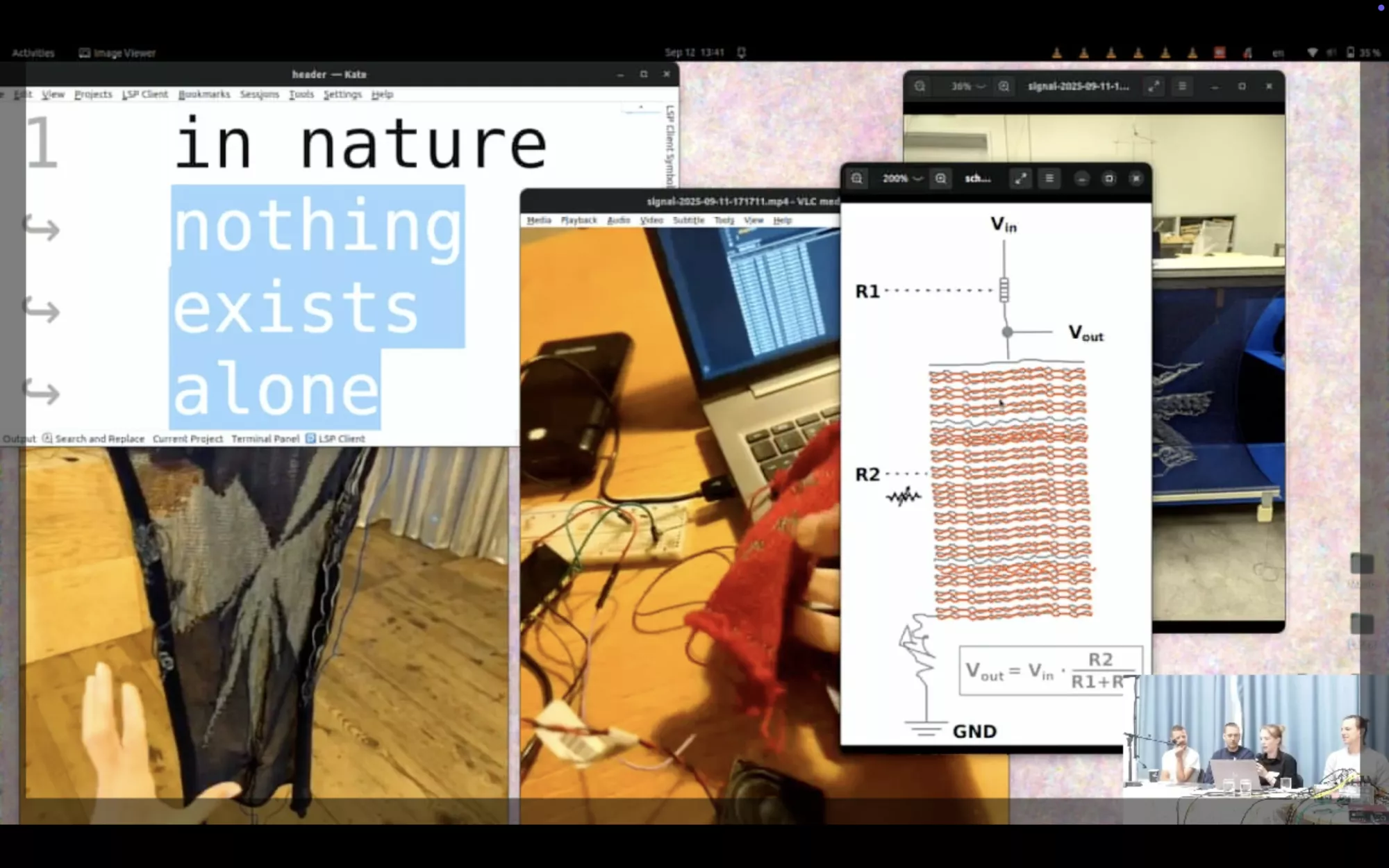
A Screenshot of the presentation at the algorythmic patterns conference in Sheffield. A digital desktop is shown with several overlapping media windows related to textile experiments. One window contains large text reading “in nature nothing exists alone.” Other windows show a hand interacting with a dark hanging textile, a close-up of electronic cables and a red textile sample on a desk, and a technical diagram of a circuit combined with a woven structure. In the bottom right corner, a small video inset shows four people seated at a table during a presentation or discussion.
© Nicole Frei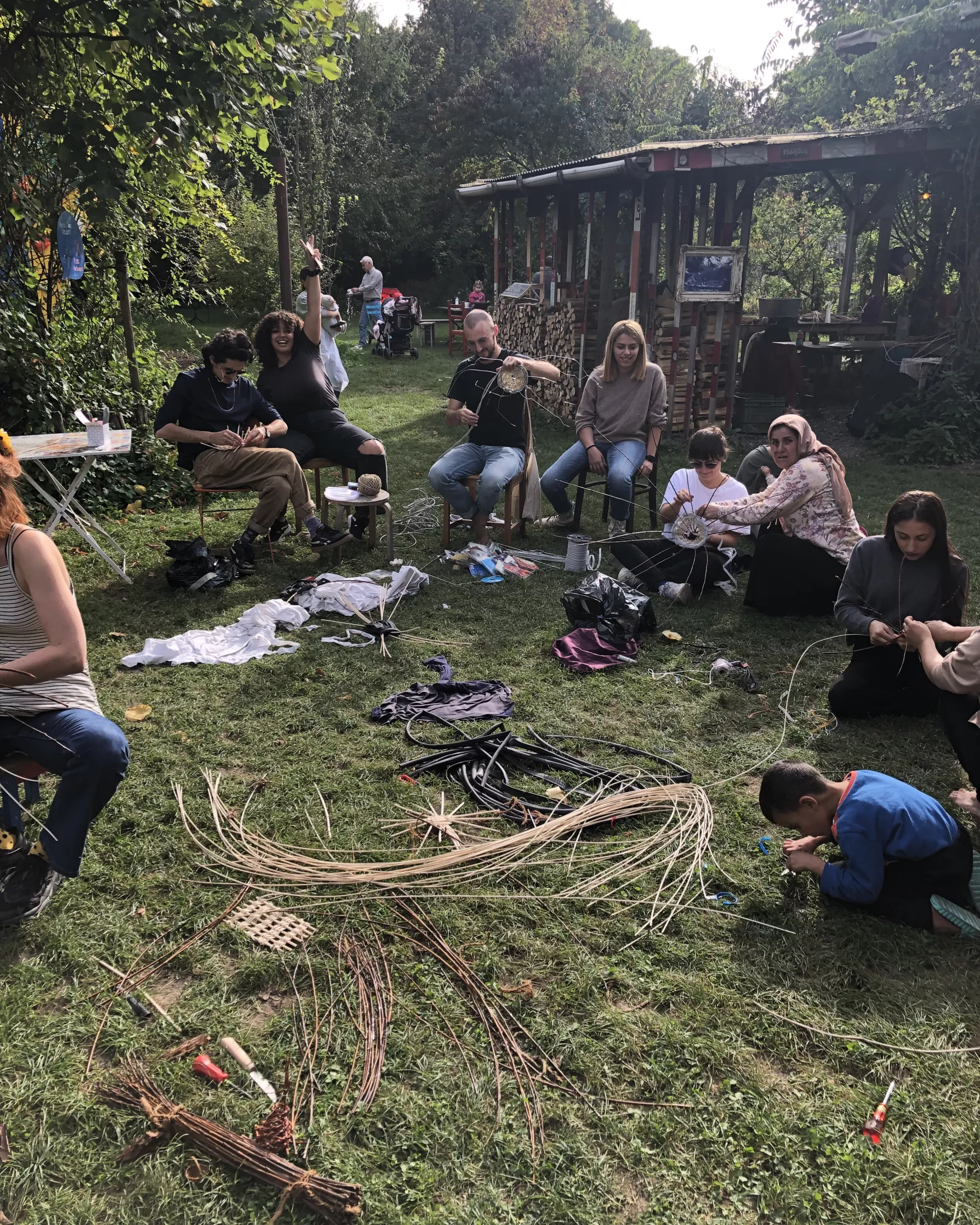
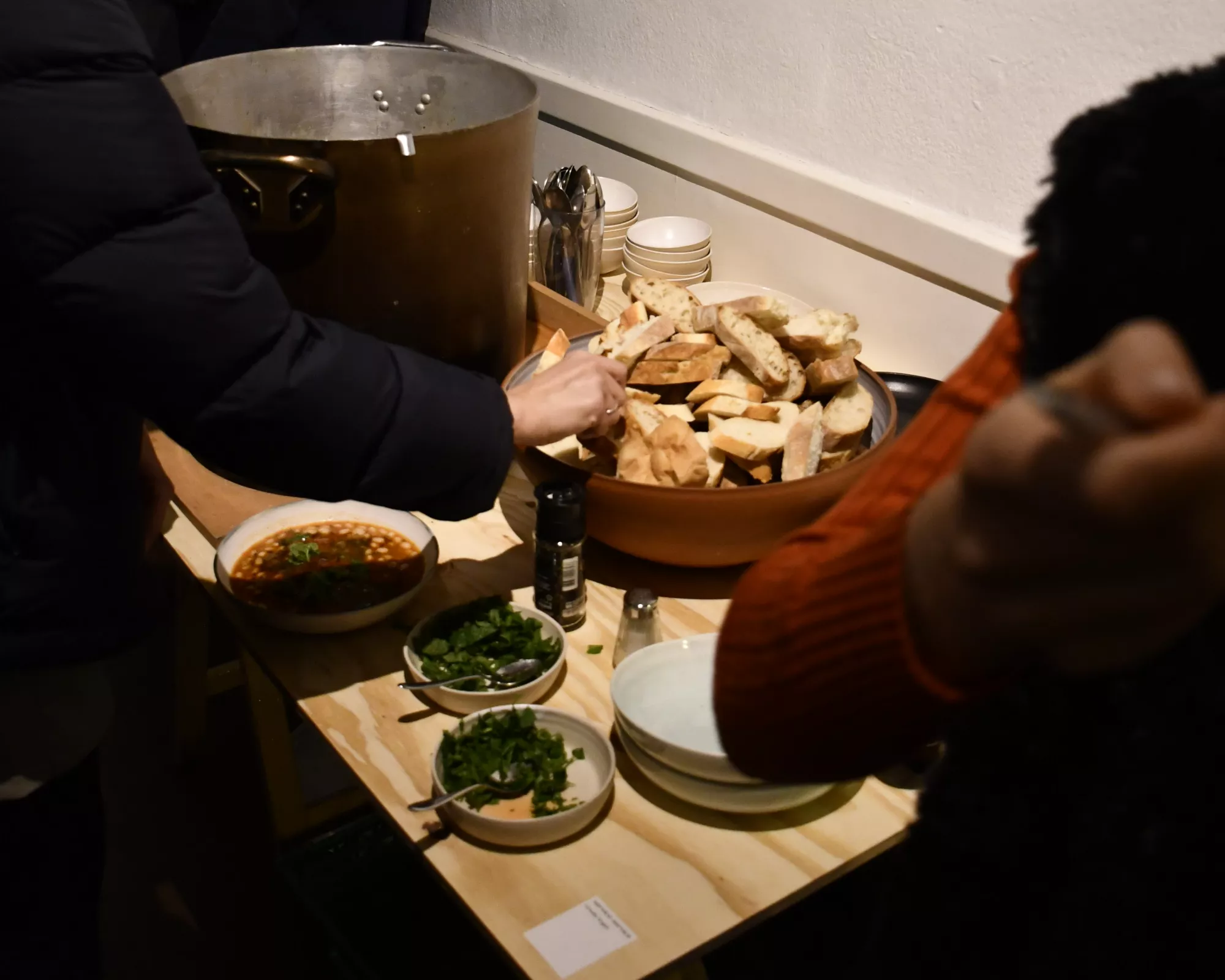
A big pot of soup is served next to a handmade bowl of bread and other small bowls with herbs. All the tableware is made by Ursula Vogel.
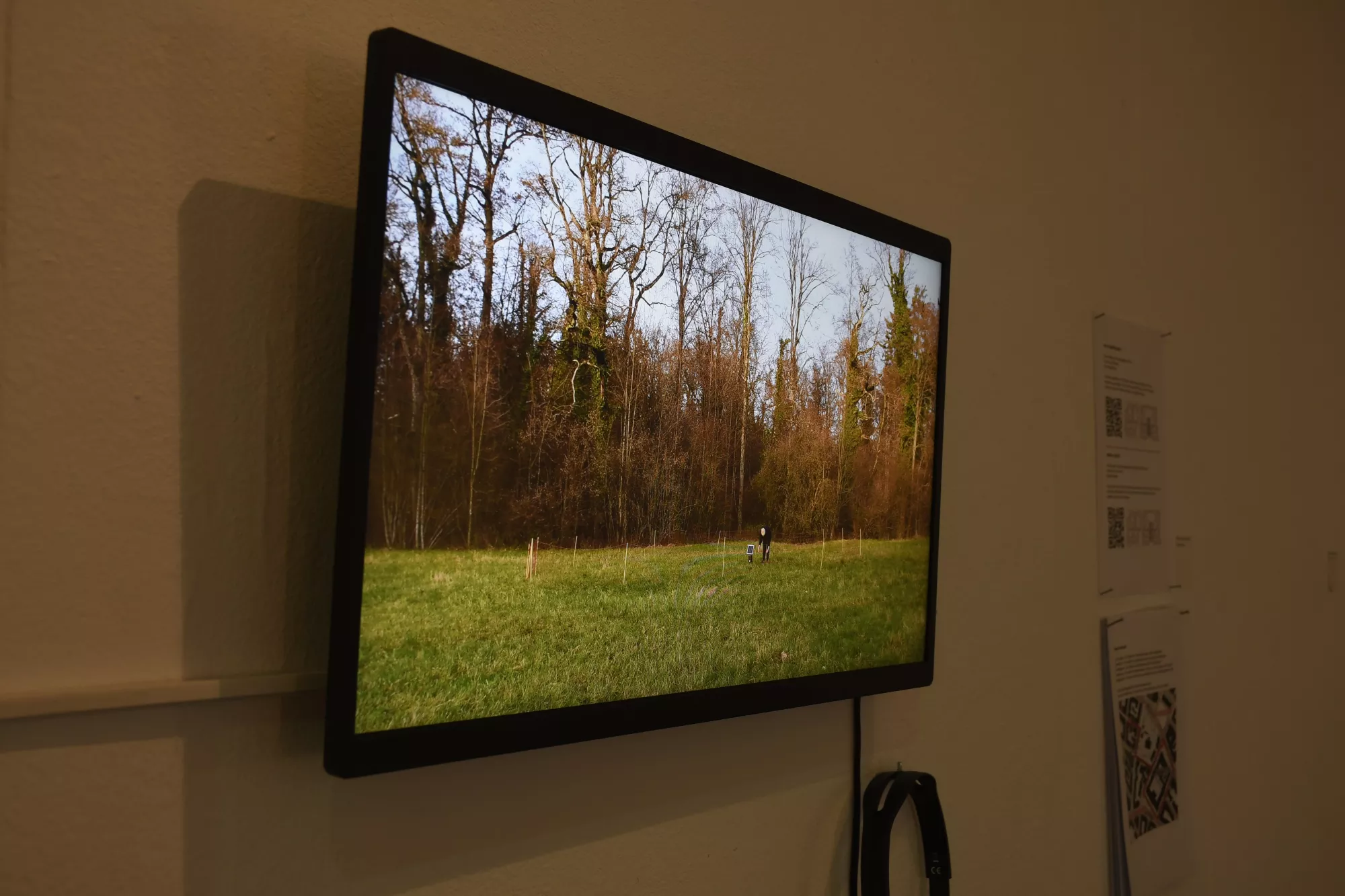
Installation by Micole Favini. A wall-mounted screen at the exhibitions space les complices* shows a video of a grassy field bordered by tall trees, with a small figure standing in the distance. A circular fence is visible in the field, surrounding or marking an area within the landscape. To the right of the screen a pair of headphones hangs below the monitor.
© Micol Favini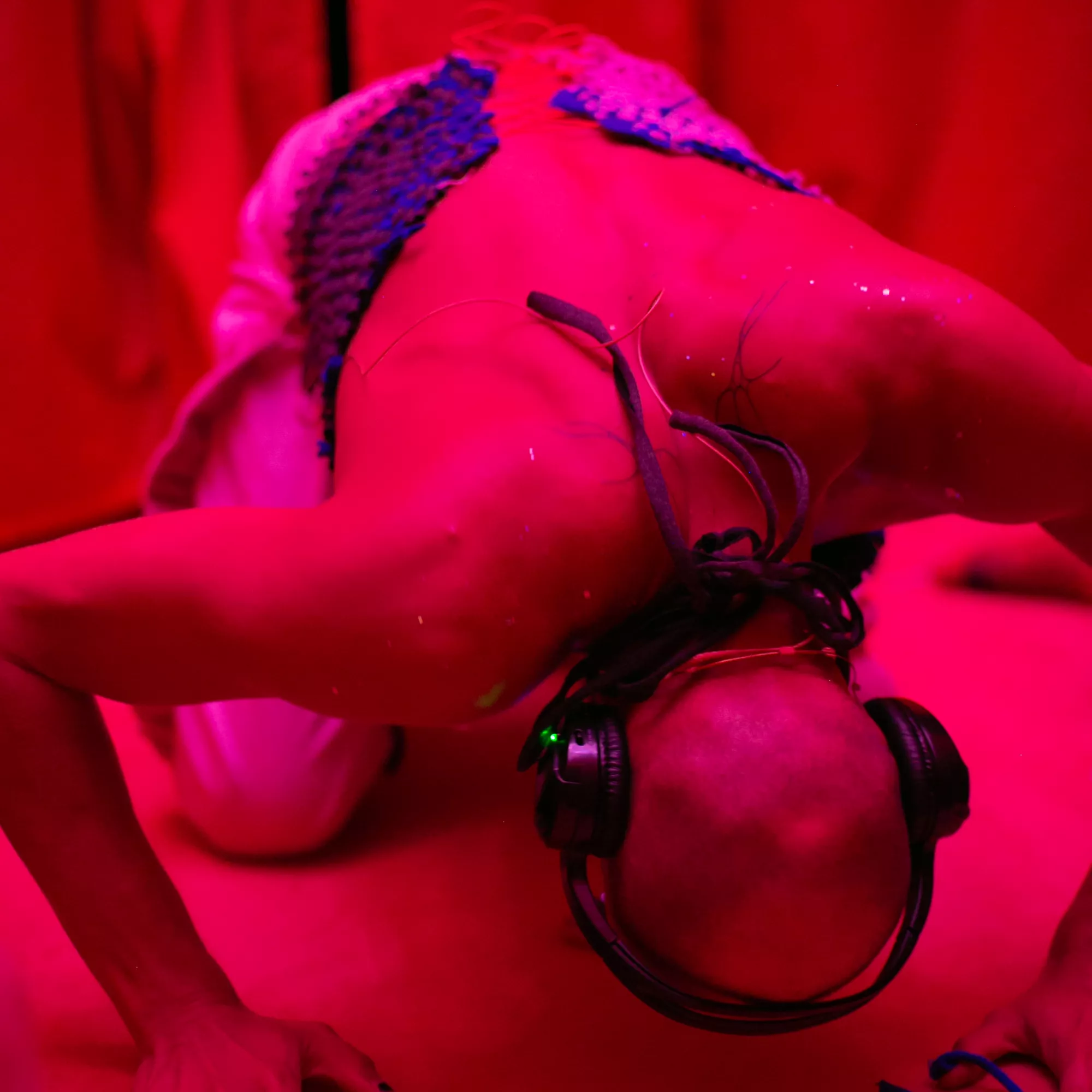
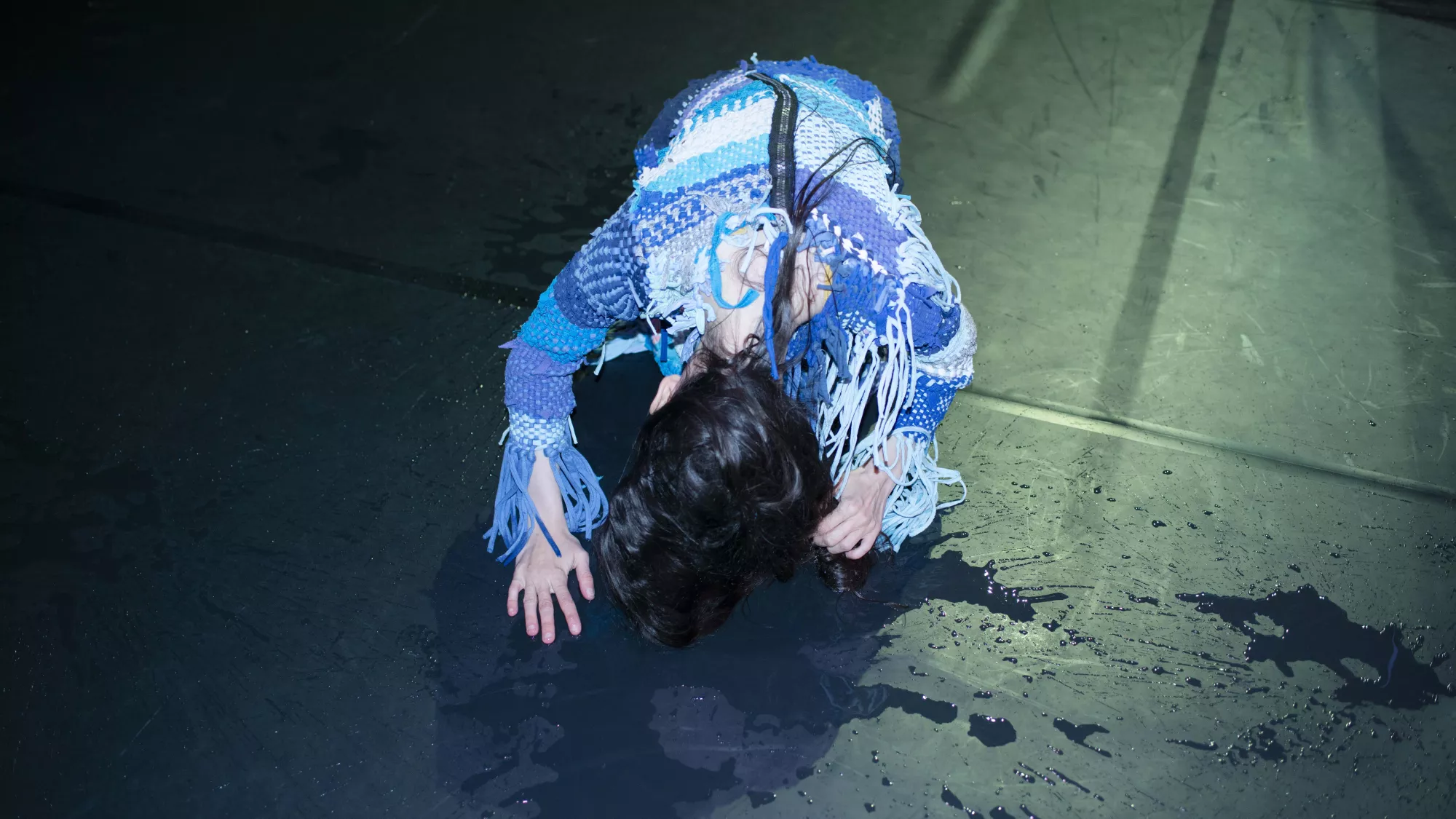
A performer with dark brown hair in a blue woven costume is curled forward on a black dance floor, surrounded by reflective puddles of water. Long loose textile strands hang from the costume.
©Maxi Schmitz
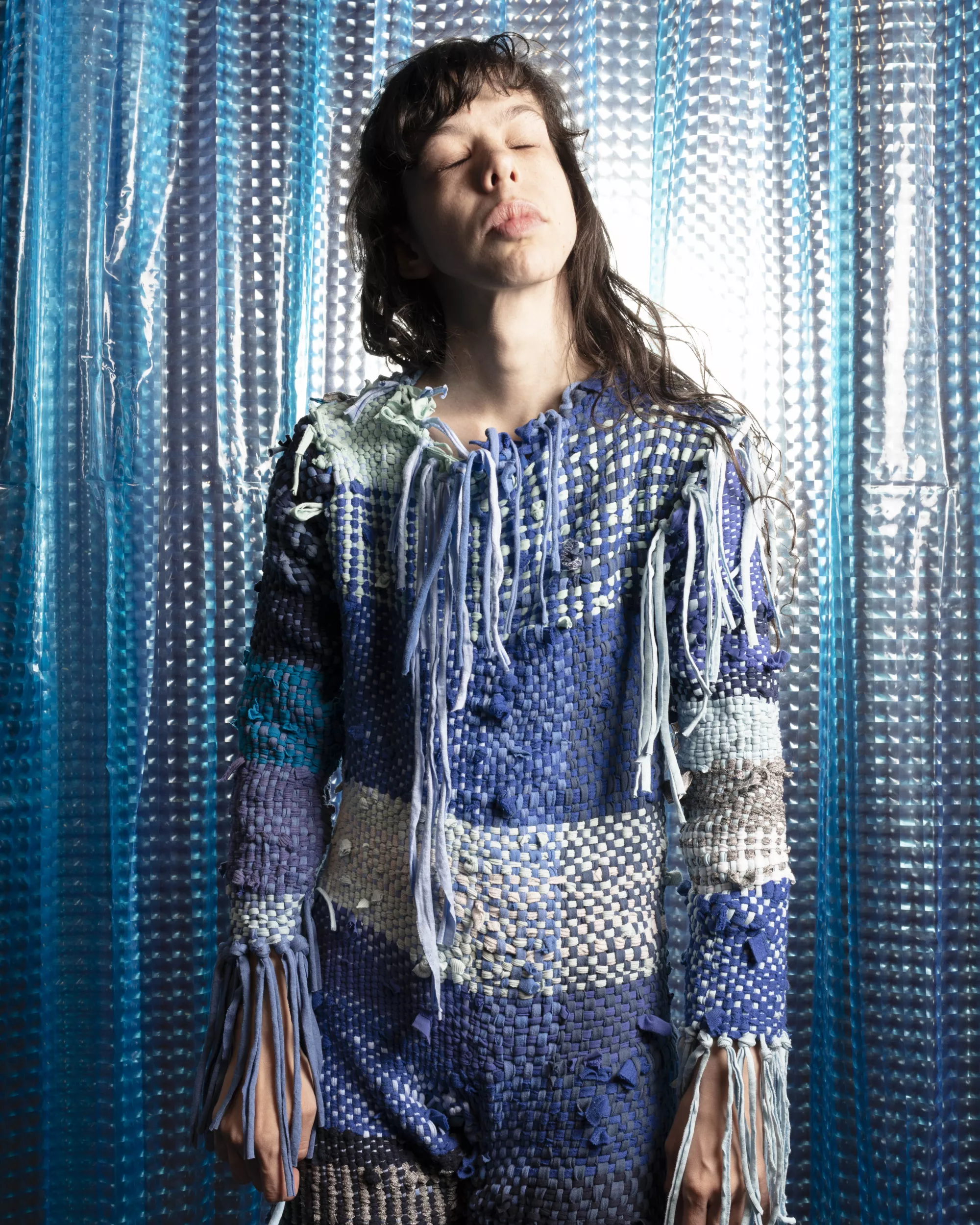
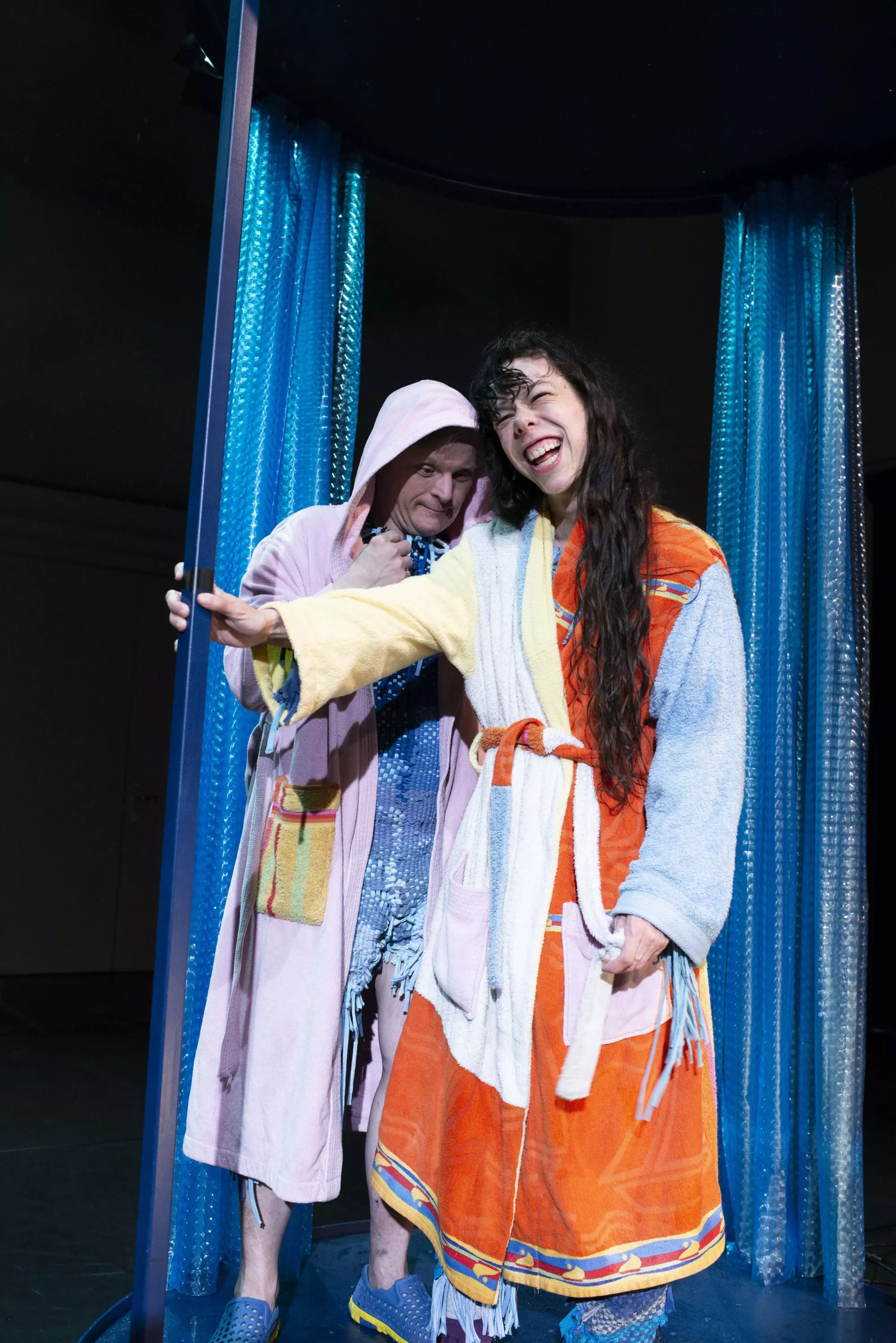
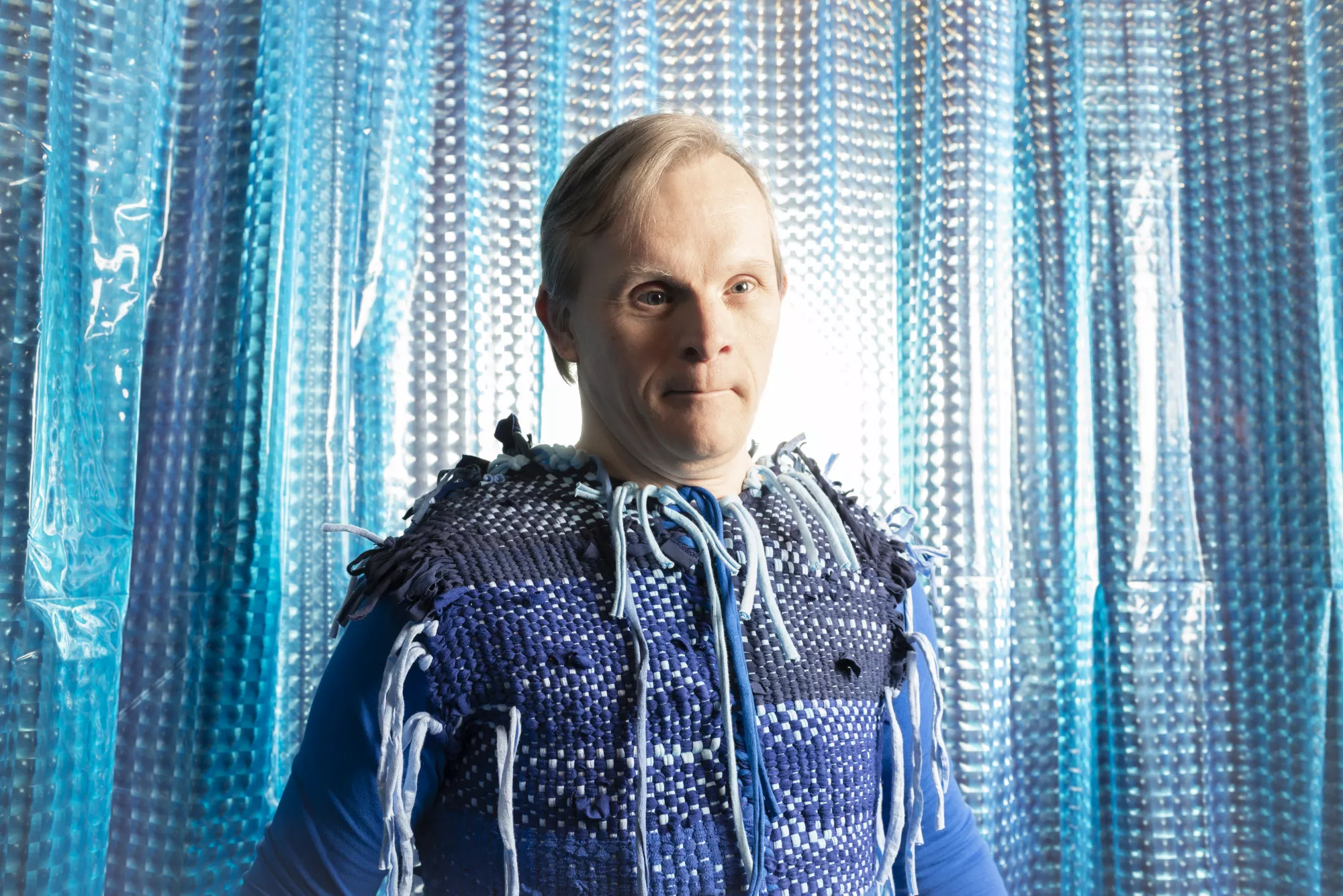
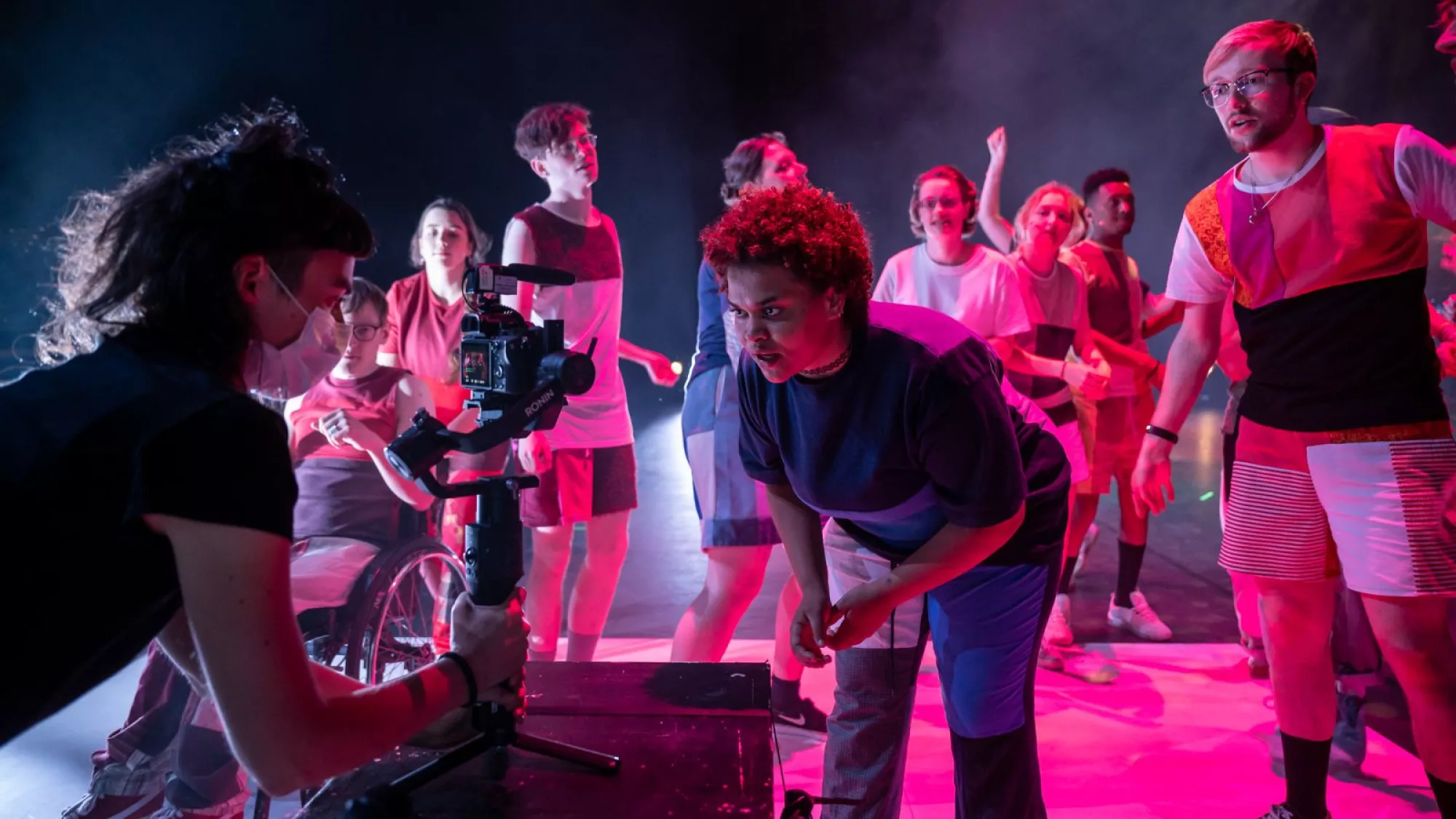
Sepp de Vries
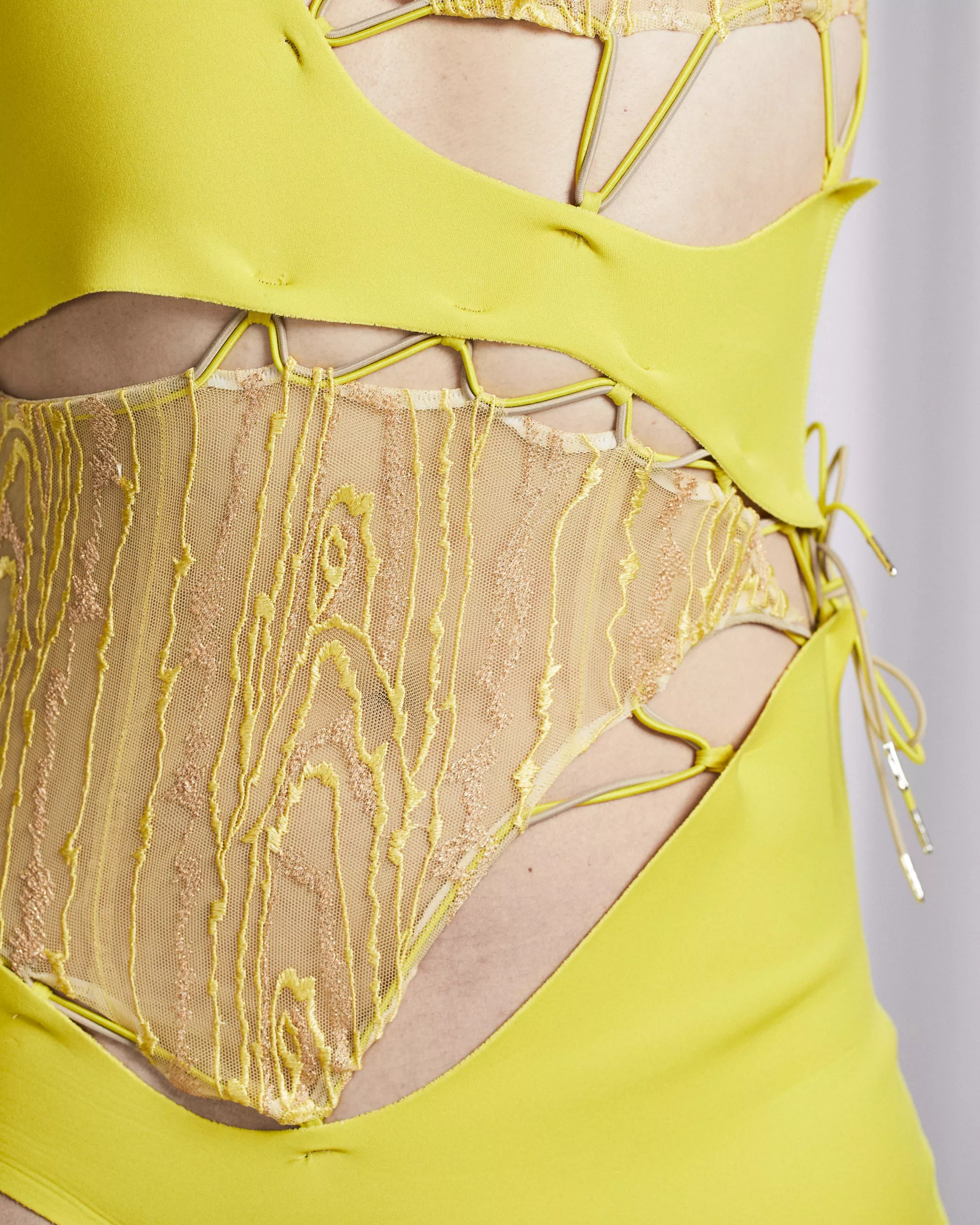
A Close-up of a white skinned person wearing a bright yellow neopren garment with cut-out sections connected by corded loops and lacing. Transparent yellow-orange lace panels with embroidered, organic wood patterns are inserted between the openings.
©Lucia Hunziker
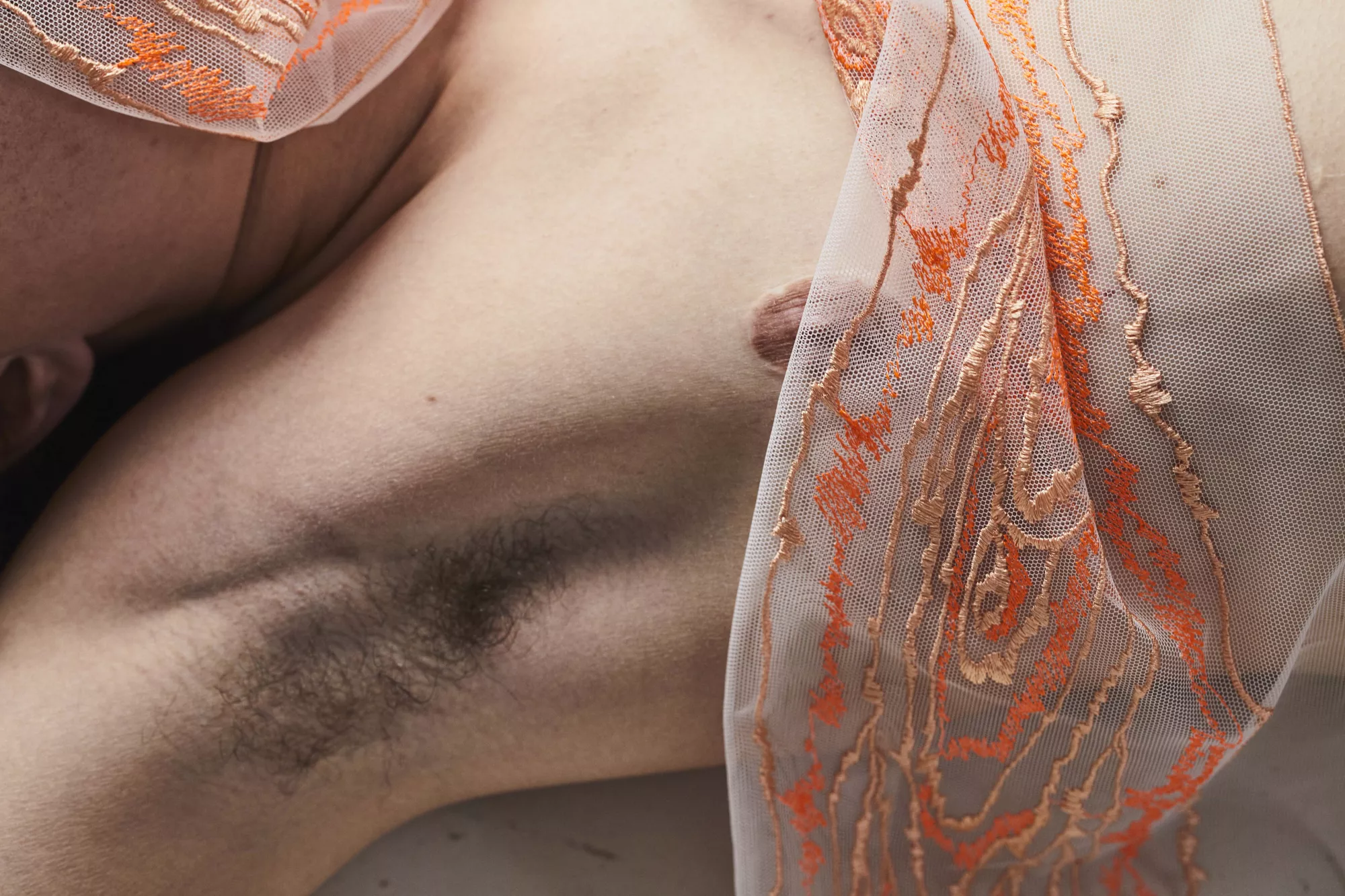
Close-up of a white skinned upper body, showing a hairy armpit, partially covered with transparent tulle embroidered in orange and peach organic woodlike patterns.
©Lucia Hunziker
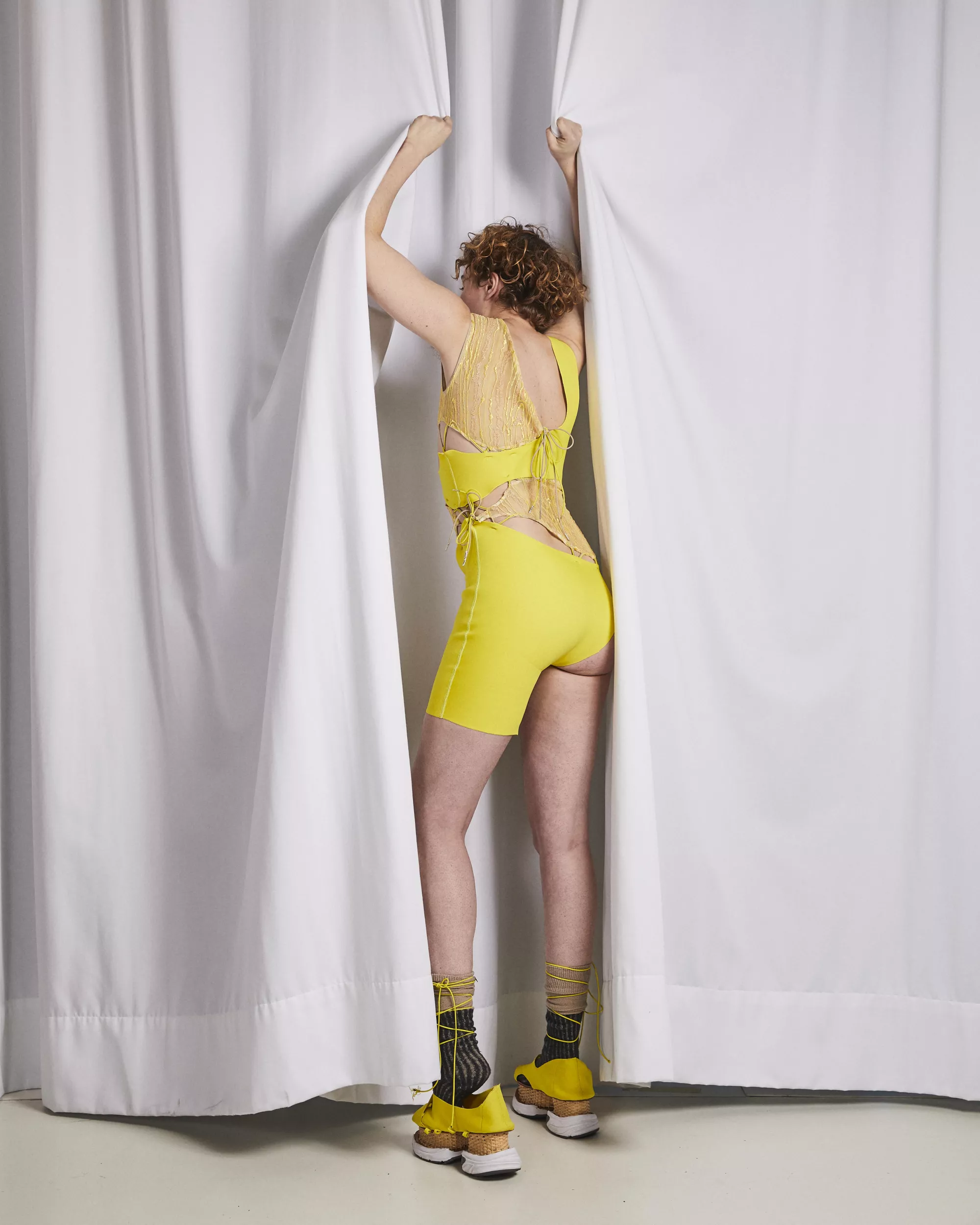
Sascha Rijkeboer seen from behind stands between two white curtains, holding the fabric open with both hands. They wear the bright yellow neopren/underwear garment with transparent embroidered lace panels, side cut-outs, tied lacing at the back, and matching yellow woven shoes.
©Lucia Hunziker
Nicole Frei
is an educator, costume and stage designer working across disciplines somewhere between design and performing arts. Nicole’s work explores artistic methods with chronic illness, challenges production methods in the performing arts, and emphasizes sustainability in her processes through traditional crafts. Since 2021, she has been working in the Master of Transdisciplinarity Studies program at the Zurich University of the Arts.
Grants, residencies and fellowships:
Companion THIRD Year 7, Academy of Theatre and Dance at the Amsterdam University of the Arts, 2026-2028
Residency Fellow Istituto Svizzero Milan, 2026/27
Acme Studio Residency London, Aargauer Kuratorium, 2026
Grant 2024, Aargauer Kuratorium, 2024
Residency Rong Design Library, Pro Helvetia Shanghai, 2024
Finalist Swiss Design Awards (BAK), 2024
Research Grant, Aargauer Kuratorium, 2023
Education Grant, Aargauer Kuratorium, 2021
Dis-Tanz-Solo Scholarship, Dachverband Tanz Deutschland, Neustart Kultur Förderung, 2021
Denkzeit Scholarship, The Cultural Foundation of the Free State of Saxony, 2020
Finalist Swiss Design Awards (BAK), 2017
Roman-Clemens Prize, 2014
Bioluminiscence
Tanzhaus Zurich, 2025
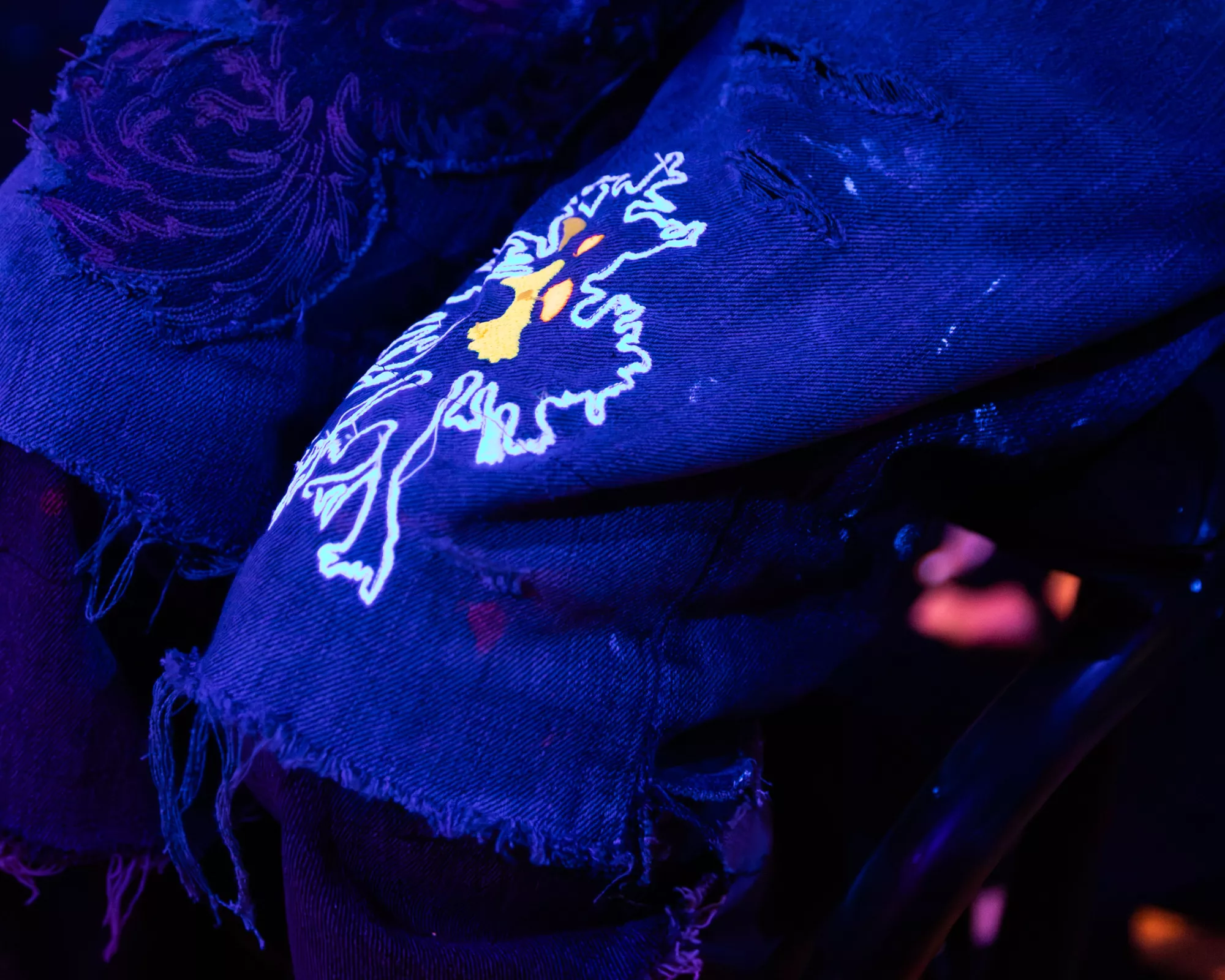
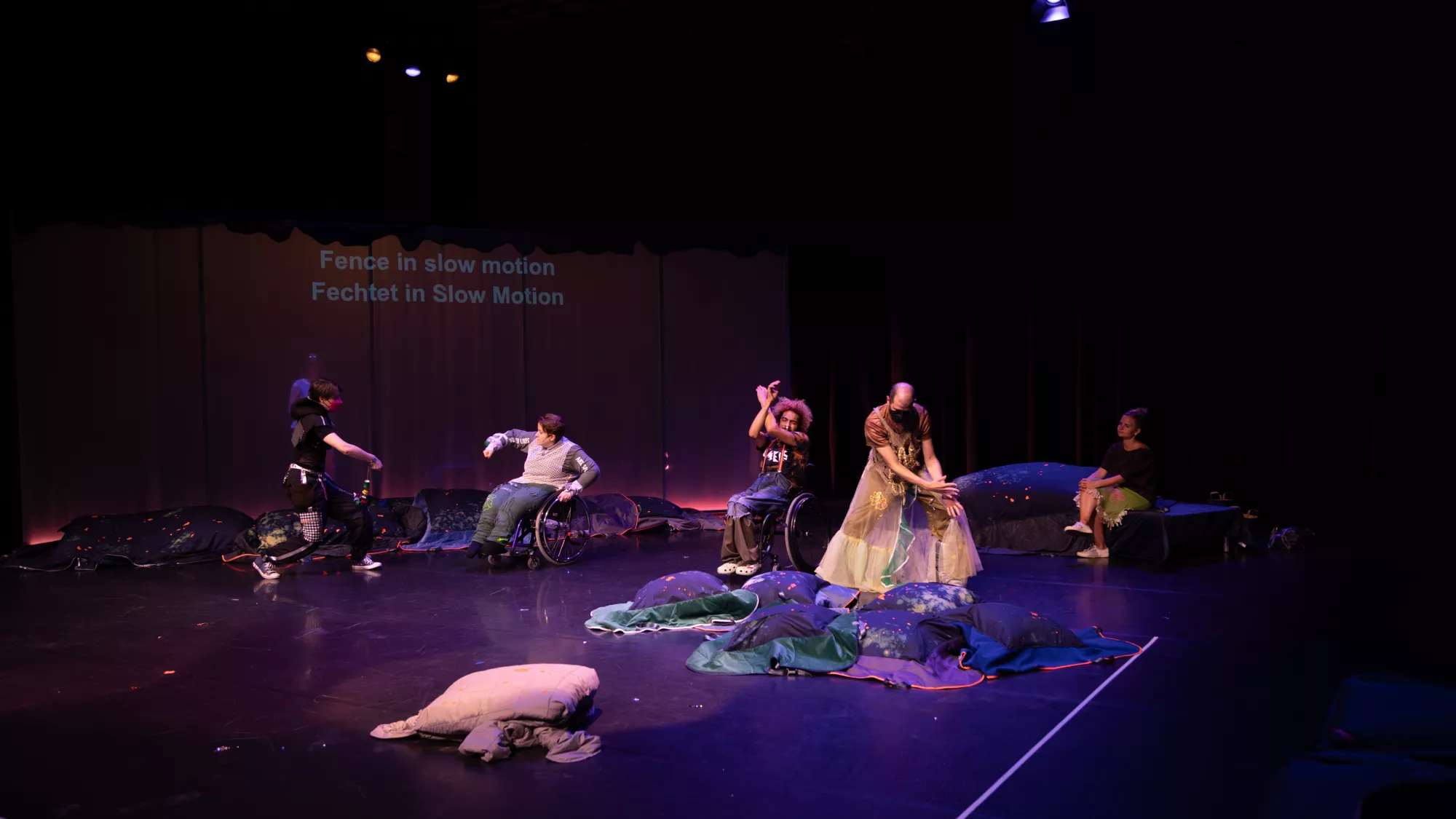
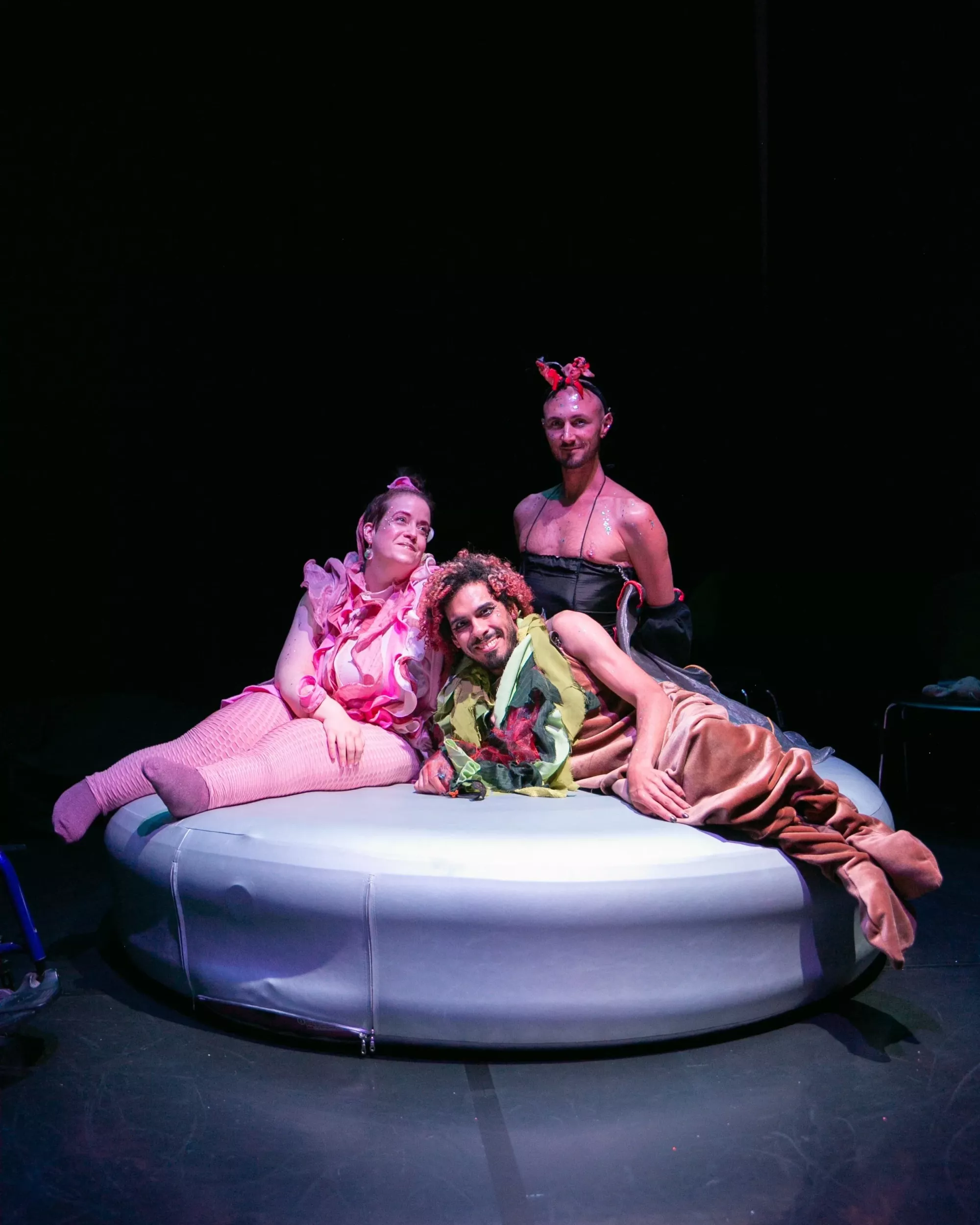
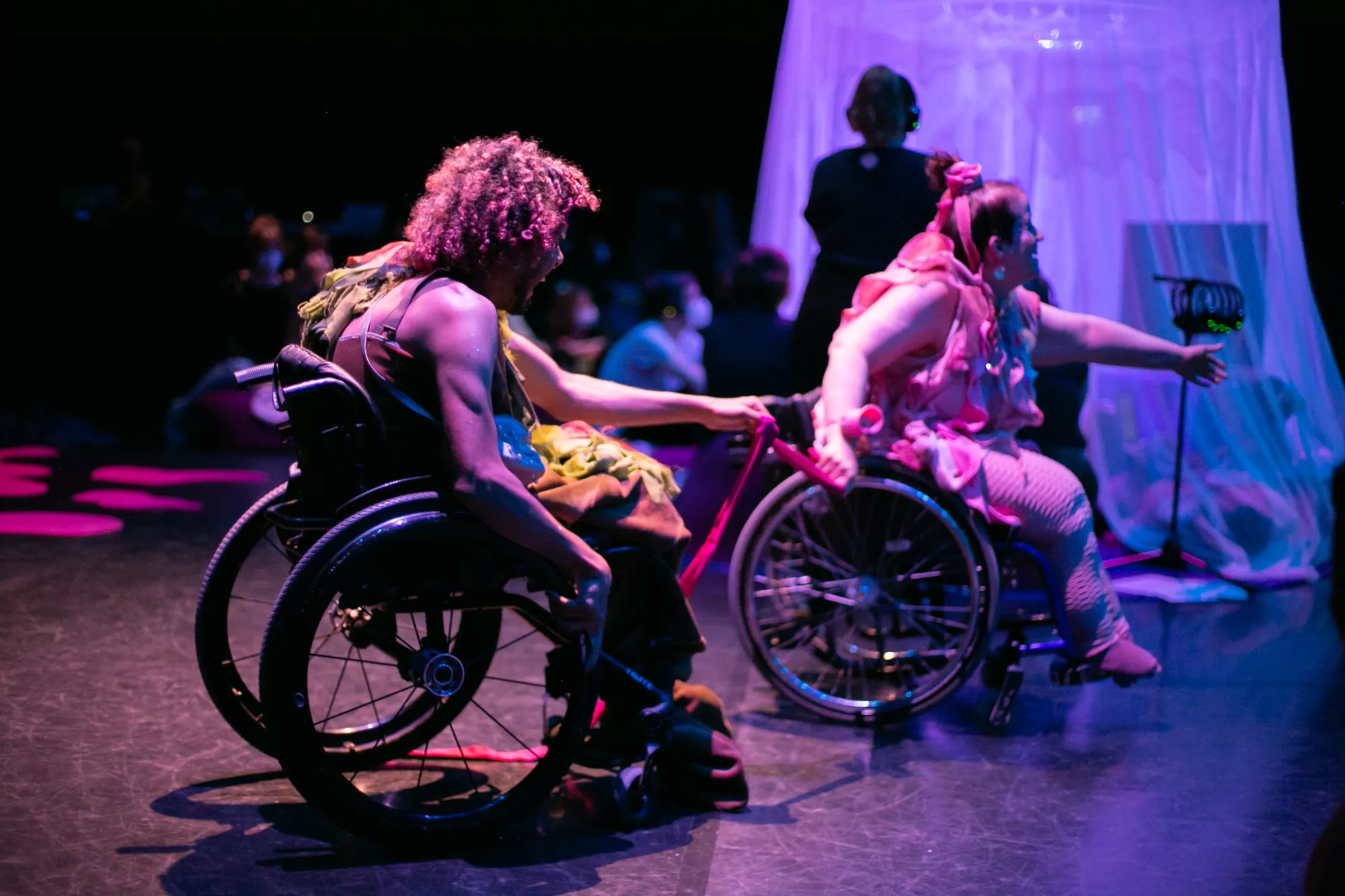
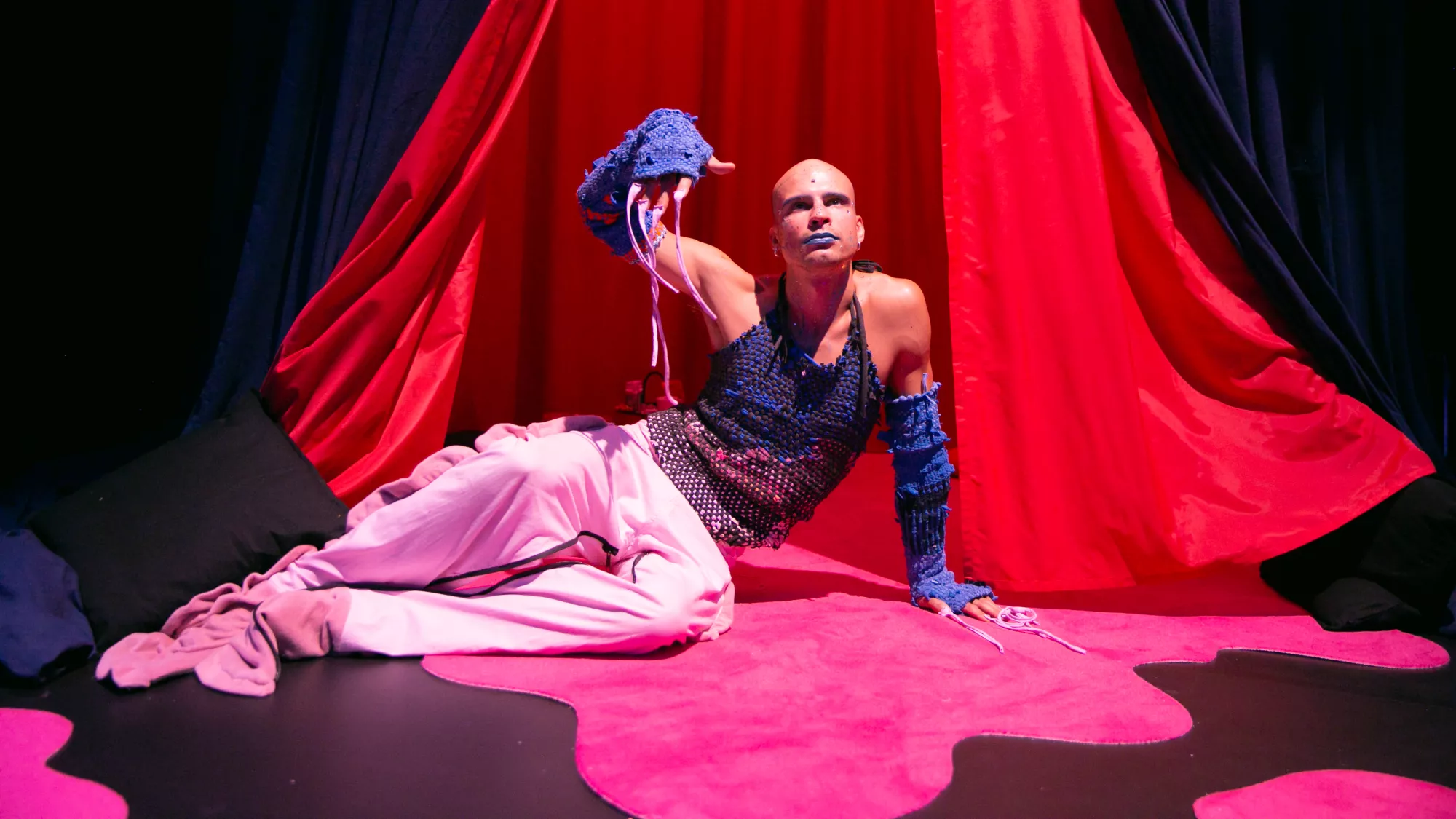
In a post-apocalyptic setting, four disabled performers connect and create a lush soundscape with their essential tools. With the help of Memory, they cast spells to honour their disabled ancestors and transform the world around them. Criptonite reclaims survival and challenges assumptions about resilience.
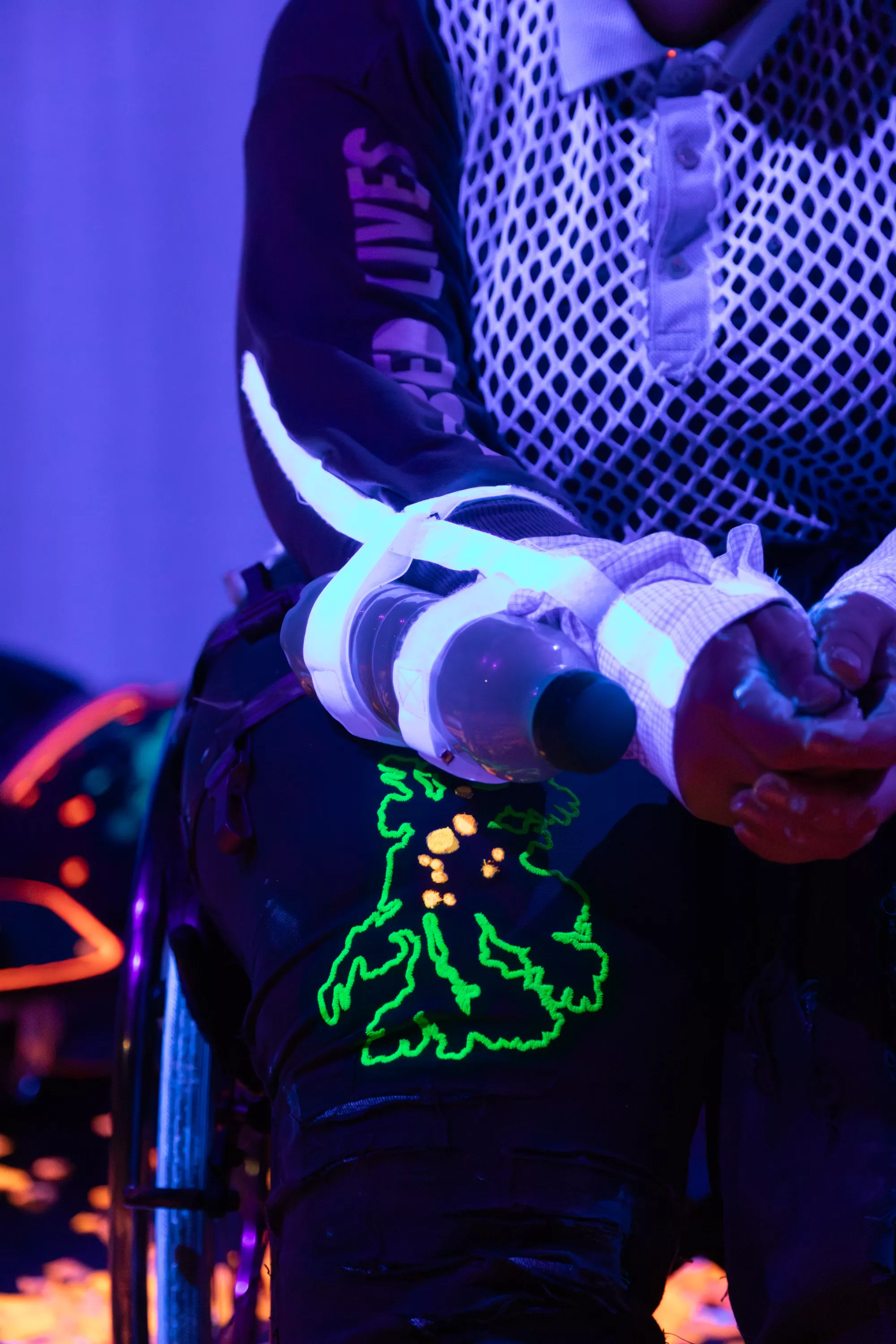
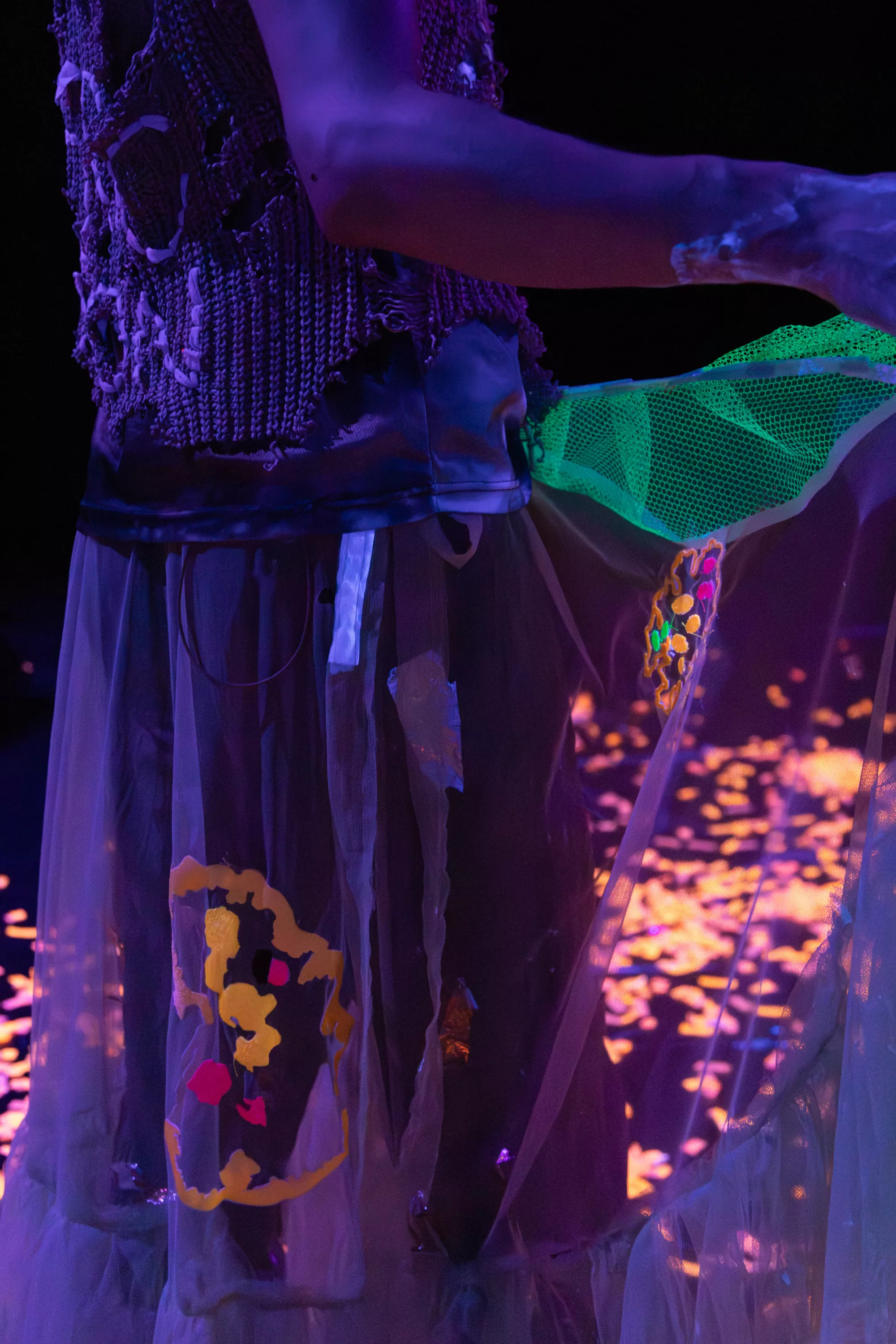
The costumes were created through upcycling and the stitching and embroidery were used as textile techniques to play with UV-reactive thread. In exchange, we integrated access tools into the costumes, including distinct sound elements for each character to support blind audiences.
The design process emphasised simplicity, improvisation and collaboration, beginning with a team workshop to collect textures and shapes for the characters. By cripping conventional theatre practices with slowing down timelines, simplifying processes, and embedding access as an aesthetic and structural principle.
Artistic Direction and Performance: (Criptonite) Nina Mühlemann, Edwin Ramirez; Development&Performance: Flor Adam Méchain, Roy Fischer; Dramaturgy: Alexandrina Hemsley; Dramaturgy, Audiodescription: Noah Mundinger; Light: Tina Bleuler, Patrik Rimann; Collaboration on Audio Description and Performance: Brianna Deproose; Sound Design: Susanne Affolter; Scenography: Therese Indermaur; Costume Design: Nicole Frei; Costume Assistant: Denisa Svachova; Production: Laeticia Blättler (Moin Moin Productions); Production Assistant: Pauline Della Bianca; Sign Language Interpreter: Tamara Bangerter; Deaf Interpreter: Monika Goldefusova; Dramaturgical Advisor Tanzhaus Zurich: Lisa Letnansky; Consulting for Sound Effects: Marquis’ McGee; Photography: Mayar El Bakry
Weaving as World-Making: Entangled Networks and Temporal Resistance
Futuress* & Dezentrum, Zurich/Online, 2025
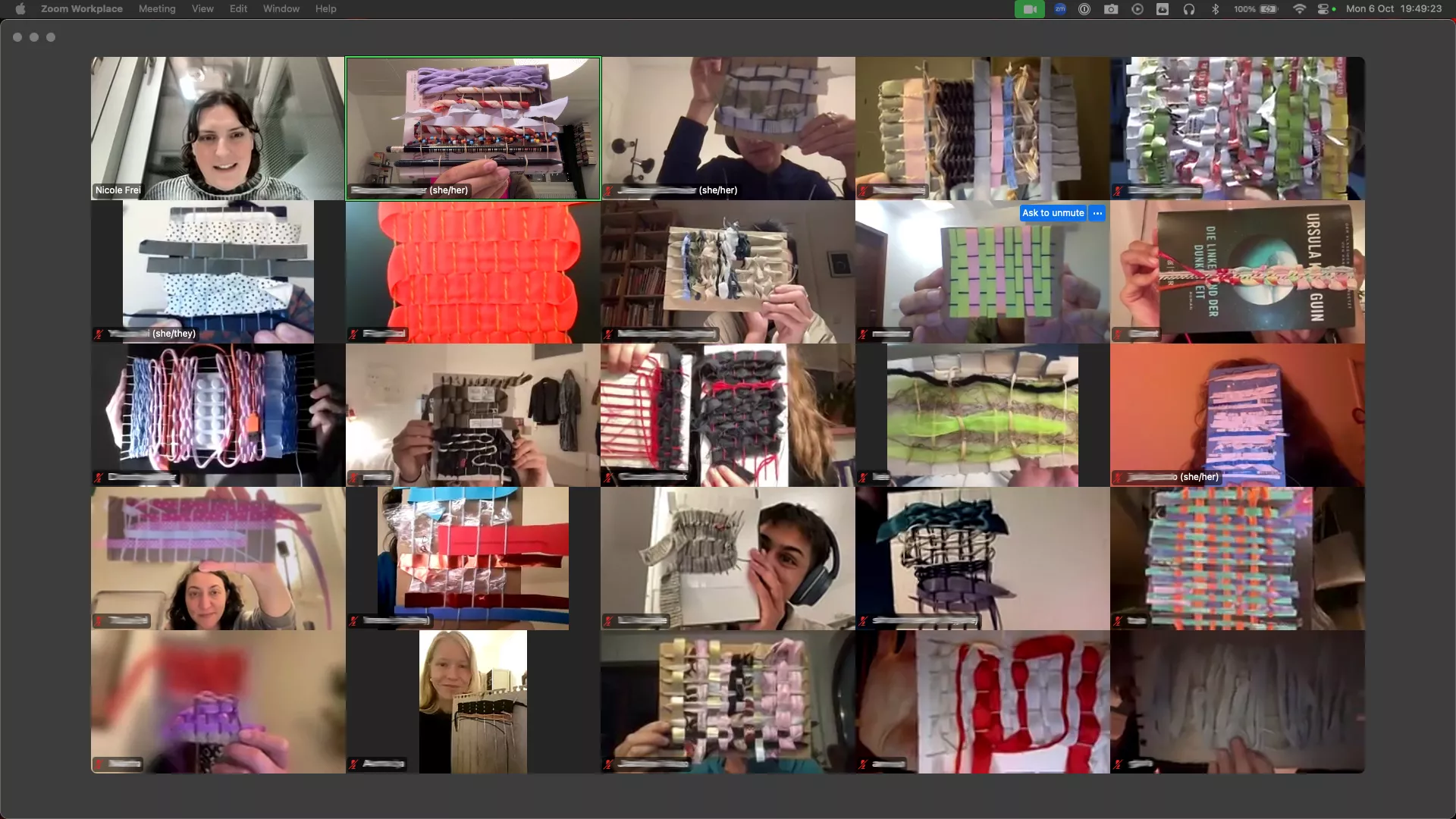
In the workshop for Futuress* (co-hosted by Dezentrum), a feminist publisher and learning platform, we explored digital networks and the politics of time through simple weaving techniques.
Participants experimented with paper, string, and wire to think about weaving as both a craft and a system of connection. Through making and discussion, we examined how patterns, stories, and temporalities become encoded in material and digital forms. The session ended with a small collective “digital tapestry” compiling participants’ woven pieces and reflections.
Focusing on remote accessibility with a sensory component, is a way to explore hands-on, collaborative workshops, making it more inclusive for people who cannot attend in person.
Workshop host: Nicole Frei; Project coordinator Dezentrum: Ramona Sprenger; Project coordinator Dezentrum: Jeannie Schneider; Project coordinator Futuress*: Mio Kojima
Craft encouters – about gaps and connections
Recidency at Rong Design Library, Pro Helvetia Shanghai, 2024
Bamboo weaving, Xiaoshan lace and Pankou making are techniques that connect things together, emphasise gaps and relate to textiles. Working with second-hand garments often means finding ways to connect materials and deal with broken garments. The perfection of traditional Chinese craftsmanship has the ability to show the beauty of gaps with upcycling.
Collaborative Pankou: The pankou is a fastener commonly used for the qipao, a traditional Chinese dress that has evolved since the Qing dynasty. In order to create new pankou designs, a workshop was held with me in the PINWU design studio, in which the eight participants developed pankou designs together. The workshop was intended to emphasise that designing things is a collaborative process in which people share their knowledge with each other.
Bamboo brooches: Bamboo is a local material that grows in the neighbourhood. Weaving is a technique that can be applied to many materials such as textiles, bamboo, metal, etc. There are various brooches that can connect the bamboo weave to the textile. The brooch can be attached to the textile with the material tension of a bamboo strap. The brooch emphasises holes or other details of a textile.
Lace links: Xiaoshan lace is a handicraft from Hangzhou. As the craft originated in Venice, the technique tells a story between Europe and China. Xiaoshan lace uses a needle and various patterns to create a three-dimensional effect, creating a contrast by experimenting with different materials and patterns. In the upcycled jumper, the Xiaoshan lace is used to close the holes and emphasise the gaps with the lace.
Assistant: Xuechen Wang; Support: Lailai Bamboo Studio, Jing er Pankou Studio, Fu Xiaoshan lace Studio, PINWU Studio
Learning from Succulents–Practices of Resilience and Care
Lab Minor Art & Science, Master Transdisciplinary Studies, Zurich University of the Arts, 2025
The teaching modul “Learning from Succulents–Practices of Resilience and Care” during Autumn semester 25/26, explored the intersection of plant survival strategies and artistic practices of resilience.
Plants with succulent syndrome such as Cacti, Agave, Aloe, Crassula, Echeveria, Euphorbia etc. have evolved through peculiar morphologies. They thrive in extreme environments through different adaptation methods like water storage, CAM photosynthesis, and structural defenses. What can we learn from these care mechanisms for our own artistic practices in the face of ecological and political crises?
In collaboration with the Sukkulenten-Sammlung Zürich, we engaged with the science behind plant resilience, examining tissue structures through cross-sections and considering parallels to artistic methodologies. Interacting with the gardener Miriam Koch and the cultural mediator Verena Plath from the Sukkulenten-Sammlung gave us the opportunity to look behind care practices for and by plants. We investigated how existential uncertainty have been transformed into creative strategies, drawing on historical and contemporary artistic responses to harsh environments.
In an exposition in the Research Catalogue, the students present the experiments with different ways of documenting the findings. These contributions take the form of written reflections, visual essays, experimental texts, material exploration and performative elements.
Co-teaching Team: Alisha Dutt Islam, Nicole Frei; Students: Karya Anliak, Neyen Paillamilla, Anna-Tia Buss, Maria Lorenzo Souto, Deborah Macauley, Jason Oberman, Leila Saad, ; Team Sukkulentensammlung: Verena Plath, Miriam Koch, Alisha Dutt Islam
Weaving Sustainable Digital Future Stories
Lab Cooperation Arts-Sciences, Master Transdisciplinary Studies, Zurich University of the Arts, 2024
The lab explored the intersections of weaving, writing, digitality, and climate discourse. Taking metaphors such as fabric, network or texture literally, we experimented with weaving as both craft and conceptual method.
At the centre stood a 1970s Brother knitting machine, a hybrid between analogue and digital, which became a tool to translate discourse into material form. Building on the Sustainability Discourses project (DIZH, University of Zurich), we traced connections between discourse networks, sensory experience, and modes of representation.
The outcomes were presented in an exhibition at Maison Shift in Zurich and further developed into a paper, which we presented at the Algorithmic Patterns Conference in Sheffield, and published in September 2025. The lab was jointly supervised by ZHdK lecturers and researchers from the Sustainability Discourses project and brought together ZHdK students and doctoral researchers from the University of Zurich.
Co-teaching Team: Irene Vögeli, Mario Angst, Nicole Frei, Ludwig Lederer; Curators: Nicole Frei, Ludwig Lederer; Students: Neyen Pailamilla, Heike Götze, Charles Kwong, Garrick Lauterbach, Ula Liagaite, Sébastien Mitra, Hans-Jakob Mühlethaler, Ramona Sprenger, Marcel Rickli, Hiba Tahhan
Vessels– Applying the Carrier Bag Theory of Fiction
Exhibition at les complices*, Lab Master Transdisciplinary Studies, Zurich university of the arts, 2023
The practice-based Lab takes Ursula K. Le Guin’s 1986 essay The Carrier Bag Theory of Fiction as its starting point. Drawing on Elisabeth Fisher’s reflections on the vessel as one of humanity’s oldest cultural tools, Le Guin proposes the container instead of the spear as a metaphor for storytelling, a means to hold, connect and continue narratives beyond heroic structures.
Building on this shift, the lab applies Le Guin’s theory transdisciplinarily, asking what the vessels within our own artistic practices are, how they are produced, what they collect and how they generate narratives. Students designed and crafted their own vessels, used them to gather material and translated these collections into stories. Alongside reading Le Guin’s essay and contemporary texts, a basket-weaving workshop grounded the metaphor in practice.
The lab culminated in an exhibition at Les Complices* Zurich.
Co-teaching Team: Caroline Baur, Nicole Frei; Students: Kirill Agafonov, Noe Arnold, Jonas Balmer, Anna Bila, Alisha Dutt Islam, Hannah Essler, Micol Favini, Valentin Hehl, Selina Hirsch, Kaija Knauer, Garrick Lauterbach, Ludwig Lederer, Ula Liagaite, Jonathan Lorand, Hans-Jakob Mühlethaler, Delnia Rahimzadegan, Daniel Riniker, Hiba Tahhan, Ursula Vogel; Basket Weaving Workshop: Katharina Berger
Creature Comforts
Tanzhaus Zurich, 2023
“Welcome to the microcosmos of Creature Comforts, where we learn about Gullibilius, a giant creature living in symbiosis with its six tiny inhabitants. The performers Edwin Ramirez, Nina Mühlemann, Paloma Ayala supported by Jenn Unfug, Kamran Behrouz, V Pierzyński and Alessandro Schiattarella will be your guides and hosts, inviting you to explore and perceive sensuality in new and unexpected ways.
Being aware that we all experience our surroundings very differently, Creature Comforts imagines a world of access, comfort and wonder for many different creatures and bodyminds. Be guided through an individually tailored experience and celebrate the Joy of Missing Out in a multilayered, immersive performance.”
Artistic Direction and Performance: (Criptonite) Nina Mühlemann, Edwin Ramirez; Performance: V Pierzyński, Alessandro Schiattarella, Paloma Ayala, Kamran Behrouz, Jenn Unfug; Dramaturgy: Nele Solf; Dramaturgical Advisor Audiodescription: Noah Mundinger; Light: Iris Rohr; Technical Direction and Video: Marek Lamprecht; Sound Design: Susanne Affolter; Scenography: Therese Indermaur; Costume: Nicole Frei; Costume Assistant: Anna-Thea Jäger; Purple Octopus Costume: Kamran Behrouz; Production: Laeticia Blättler (Moin Moin Productions); Production Assistant: Jenn Unfug; Outside Eye: Kathrin Veser; Internship: Maria Kattner; Dramaturgical Advisor Tanzhaus Zurich: Simon Froehling; Illustration: Kamran Behrouz; Photography: Yuri Laura Rivas Kaufmann
Salty Tears
Community Center GZ Buchegg Zurich, 2021
The dance piece for all age groups from the age of four is about dealing with loss, the process of consolation and the question of what tears actually are or can be.
While researching methods that enable sustainable design and techniques that are particularly suitable for upcycling, I encountered weaving. I experimented with elastic jersey fabrics, which are not normally ideal for the handloom, in order to produce a fabric that is as adaptable as possible for various body shapes.
The celebration of slowness is inherent in textile work. Starting a process of including crip time into my working process lead me to appreciate weaving as a crip tool.
Performance: Caitlin Friedly, Matthias Grandjean; Art Director: Leonie Graf; Dramaturgy and Concept: Ketty Ghnassia; Set and Costume Design: Nicole Frei; Set Design Assistant: Lilli Unger; Concept and Set Construction: Norman Ries; Light Design: Sina Knecht; Music and Sound Design: Gessi Zini; Sound Design: Siavash Namehshiri; Technical Support: Robert Meyer; Photography: Maxi Schmitz; Internship: Andrea Köppen; Video: Anaïs Bourgogne, Paola Sabbarese; Production: Annina Birrer Alexandra Adler
Aufhören
Theaterhaus Gessnerallee Zurich, 2020–2021
"If it were that easy, I would have stopped doing it a long time ago." The recklessness of Boomers, the cynicism of Generation X and the passivity of Millennials are driving the youngest generation to take responsibility. Their willingness to break familiar routines and break new ground is making history. But a system is not overthrown without resistance. For those who see their standards in danger also raise their voices. Cries of protest, demanding the ideal of freedom and proclaiming their own oppression, can be heard from both the left and the right. In Aufhören, 15 players from LAB dance out of line and across the stage as they ask themselves: "Who do I have to conform to? What does protesting mean? When should I stop?"
Performance: Balz Spengler, Elias Gerber, Federica Sparapani, Fiona Landolt, Hannes Krummenacher, Ilja Gebistorf, Leonie Finger, Levin Geser, Loukina Tille, Maimuna Barry, Noémie Märki, Patryk Becker, Samiel Mehari, Sixtine Dromigny, Svenja Duscha; Theater pedagogy: Deborah Imhof; DoP: Katarina Tereh; Dramaturgy: Dominik Wolfinger; Scenography and Costume: Nicole Frei; Collaboration costume: Lina Mayer; Movement: Lukas Schmocker; Assistant: Meret Zangger; Technical supervisor: Demian Jakob; Outside eye: Marcel Grissmer, Elina Wunderle; Photography: Sepp de Vries
Queering the norm
Bischoff Gamma x Institute of Fashion Design, FHNW, 2019
Embroidery and Underwear/Swimwear Design to question the binarity in Embroidery as well as underwear Designs. The Design can adapt to de different needs of different bodytypes.
Photography: Lucia Hunziker ; Model: Sascha Rijkeboer

Portrait of Nicole Frei. She is a white female, with wavy brown, shortish hair. She is standing among large cacti and succulent plants, wearing a black shirt and looking directly at the camera. The foreground and background are softly blurred by long plant leaves and cactus forms.
© Johanna Saxen